The man is on a cell phone, clearly upset. Almost - theatrically upset. I'm walking down Market Street and he is half a stride behind me. It's Friday night, and the street is crowded.
Shit! he says, clapping the phone shut.
He's caught up to me, and catches my eye. I'm sorry about that, he says. I didn't mean to...it's just...
He throws his arms in the air. I got carjacked today, he says. My family was carjacked. At the point of a gun.
I stop. I'm sorry to hear that, I tell him. Is everyone okay?
From the moment I hear him on the cell phone, I'm wary. No reason in particular, nothing I can point to - I keep looking for the director, the script girl. He wears a long herringbone coat, leather gloves. A suit. It looks like a costume.
He tells me a long, disjointed story. Pulls out a paper with notes taken on it. He says he has the police report. Details to make it real. The place: just south of here on 101. Their destination: Eureka. They planned to make Eureka tonight. The car was recovered. He's not a transient. You gotta trust me, he says. His wife and kids are waiting by the side of the road. He needs to buy a gas can, gas.
That's when it clicks into place. Gas can. An old friend of mine ran a variation of this very scam some twenty plus years ago. It was a strange and short period for him. He wore a suit and carried a gas can. A story about breaking down just outside of town. Wife and kids waiting.
The carjacking is a thrilling new twist. Violence! Drama!
I stop him there. I don't have anything for him, I say. I'm sorry.
What I really want to say is: how's this working out for you? What I want to say is: I'm sorry you're going to have to go through the whole show again for someone else. It's easier to just ask for cash up front.
What I want to know is: am I getting harder? Am I losing my ability to simply trust?
I'm out with a friend and a woman appears behind us. Help out a woman with a dollar, will you? she asks. We don't have a thing, we say.
Oh, come on, she says. Like we're not playing the game right. Like we didn't just step out of a cab. Like we owe her something, and if we can't just own up say No, without the excuse, we have to pay up.
And I want to know how long I can hold onto my trusting self in this place and this time. If I can look past the scams, the sense of entitlement.
If I can be brave enough to see into a person on the street, if I can learn to not look away, but look in. Look all the way in. And find the person inside who is worth the chance.
Sunday, March 28, 2010


Monday, March 22, 2010
The sun shines down
On a day like today, you have to be out in the sun. You have to steal time, walk outside, look at all the women and girls in their sundresses, flesh shining and hungry; white girls already pinking on shoulders, cheeks.
I start in my neighborhood, where the guy selling Street Sheets sings as I pass. We all love you, he calls after me, gold tooth catching sunlight.
As I walk uphill, the street people thin out, drop away; at the top of the hill, a tall young woman rises from the back seat of a limo at the Fairmont. High-heeled sandal, white draped calf, thigh, and now dark hair caught up in a jeweled clasp, bare shoulders, waist: she stands on the walkway in a long white evening gown. Just beyond her, in the doorway of the hotel, an older woman waits for her car, aggressively ugly in clothes chosen to announce wealth: shapeless, heavy, baldly ornamented.
Across from Grace Cathedral is a small park. Bronze fountain supported by naked young men, bronze eyes blank. A woman lies on a bench, head on her purse, eyes closed - almost closed - she tries to sleep but her consciousness keeps her tuned in.
Every bench is occupied and much of the grass, skirts lifted and sleeves rolled to expose skin to sun. At one bench is a man who would look at home in my part of town, down in the flats: dirty beard, dreadlocked hair. He's spinning.
I stop to look closer. I had thought it was a bicycle wheel, but now I see the thread winding from a spindle in his hand to the shining wheel. The wheel spins and the spindle dips and wool or cotton or gold from straw is spun.
The spindle dips and releases me, long running strides down the hill. Soon I'll be home, the mirror in my loft spinning the last drops of sunshine into a jar on the shelf by the bed.
At night, when the back door to the strip club slams and I hear voices spiraling up the walls to my window, I'll open the jar. I'll hear the beginnings of a fight, the Don't you dare, the I'm not the one, and I'll scatter stored sunlight down and over their shoulders.
They'll stop, look up, breathe in, and remember a day when bare toes dug into dirt and grass roots. When sun cooked into shoulders and back. When they dreamed of a spring that never ends.
I start in my neighborhood, where the guy selling Street Sheets sings as I pass. We all love you, he calls after me, gold tooth catching sunlight.
As I walk uphill, the street people thin out, drop away; at the top of the hill, a tall young woman rises from the back seat of a limo at the Fairmont. High-heeled sandal, white draped calf, thigh, and now dark hair caught up in a jeweled clasp, bare shoulders, waist: she stands on the walkway in a long white evening gown. Just beyond her, in the doorway of the hotel, an older woman waits for her car, aggressively ugly in clothes chosen to announce wealth: shapeless, heavy, baldly ornamented.
Across from Grace Cathedral is a small park. Bronze fountain supported by naked young men, bronze eyes blank. A woman lies on a bench, head on her purse, eyes closed - almost closed - she tries to sleep but her consciousness keeps her tuned in.
Every bench is occupied and much of the grass, skirts lifted and sleeves rolled to expose skin to sun. At one bench is a man who would look at home in my part of town, down in the flats: dirty beard, dreadlocked hair. He's spinning.
I stop to look closer. I had thought it was a bicycle wheel, but now I see the thread winding from a spindle in his hand to the shining wheel. The wheel spins and the spindle dips and wool or cotton or gold from straw is spun.
The spindle dips and releases me, long running strides down the hill. Soon I'll be home, the mirror in my loft spinning the last drops of sunshine into a jar on the shelf by the bed.
At night, when the back door to the strip club slams and I hear voices spiraling up the walls to my window, I'll open the jar. I'll hear the beginnings of a fight, the Don't you dare, the I'm not the one, and I'll scatter stored sunlight down and over their shoulders.
They'll stop, look up, breathe in, and remember a day when bare toes dug into dirt and grass roots. When sun cooked into shoulders and back. When they dreamed of a spring that never ends.
Monday, March 15, 2010
Dianetics changed my life
Sometimes it seems I've moved to a whole new country. A planet of lost souls, people hanging on to the edge of the city with blackened fingernails.
A woman toddles toward me with a terrifying goggle-smile. Her hair is blond and curly. She was cute, once. She might have been pretty. The smile now is pulled painfully over the front of her face. "Helloooo!" she says as I pass. "Helloooo!" exactly the same overbright tone to the person behind me. "Helloooo!"
Inside a restaurant, in a nearly empty dining room, a woman and her children raise their arms above their heads and spin. The woman pauses, and her eyes meet mine. She shrugs, raising her arms again.
A man in a wheelchair speaks a language that doesn't exist on earth.
On the bus, I'm taken in by the Dianetics ad. Indisputably the most read book on the human mind ever written, it says. Indisputably? I think. It seems an outlandish claim. A young man is sitting next to me. He looks like any of a thousand young men in the city. Skinny jeans, expensive backpack. Just before his stop he stands and reaches over the head of the woman across the aisle. He pulls at the ad, diligently. Sorry, he mumbles, as it doesn't give as easily as he expected. Finally he tears it down the middle, crumpling half in his fist before hopping off the bus.
Guess he doesn't like Scientology, a man at the back of the bus says.
The erupting volcano remains.
At night I dream of the blond woman's rictus, her teeth showing in a Joker grin. Helloooo? she asks my sleeping self. Hello, I want to say. Hello. I see you.
A woman toddles toward me with a terrifying goggle-smile. Her hair is blond and curly. She was cute, once. She might have been pretty. The smile now is pulled painfully over the front of her face. "Helloooo!" she says as I pass. "Helloooo!" exactly the same overbright tone to the person behind me. "Helloooo!"
Inside a restaurant, in a nearly empty dining room, a woman and her children raise their arms above their heads and spin. The woman pauses, and her eyes meet mine. She shrugs, raising her arms again.
A man in a wheelchair speaks a language that doesn't exist on earth.
On the bus, I'm taken in by the Dianetics ad. Indisputably the most read book on the human mind ever written, it says. Indisputably? I think. It seems an outlandish claim. A young man is sitting next to me. He looks like any of a thousand young men in the city. Skinny jeans, expensive backpack. Just before his stop he stands and reaches over the head of the woman across the aisle. He pulls at the ad, diligently. Sorry, he mumbles, as it doesn't give as easily as he expected. Finally he tears it down the middle, crumpling half in his fist before hopping off the bus.
Guess he doesn't like Scientology, a man at the back of the bus says.
The erupting volcano remains.
At night I dream of the blond woman's rictus, her teeth showing in a Joker grin. Helloooo? she asks my sleeping self. Hello, I want to say. Hello. I see you.
Thursday, March 04, 2010
Alarm will sound as a whooping horn.
This morning, as I walk to work, I see a man in the middle of the street. In the middle of a lane. I hear a siren coming this way. He plants his feet wide, bending his knees like he's going to go into a crouch. I watch him, curious.
At work there's a plate by the elevator with instructions in case of a fire. It tells me:
Alarm will sound as a whooping horn.
A sign inside the elevator informs me that the alarm will be tested tomorrow morning at 7 am. It will be very loud, it says.
The alarm is very loud. Last week it rattled me at my desk. We filed outside like schoolkids, down the metal and cement stairway and into the parking lot. We stood around and looked at each other while the building screamed.
In my new sixth floor loft, I can't hear much noise from the street. I do hear sirens; after a while they become a sort of backdrop. Tonight I hear protesters moving down Market toward City Hall. I step out on to the fire escape to watch them go by, escorted by police cars and vans and their flashing lights.
I can also hear church bells from my window.
The man in the middle of the street emerges from his crouch as the siren approaches. He's young and beautiful. He stretches one long arm out front of his body, palm up. He's pulling the ambulance toward him. Scooping out into the air with both arms now, and now his mouth opens, the siren is inside me and inside him; I see but don't hear his laugh as it rocks by, tossing his hair back in its wake, his eyes are open and both arms are in the air and he's laughing like he's found the secret of joy.
At work there's a plate by the elevator with instructions in case of a fire. It tells me:
Alarm will sound as a whooping horn.
A sign inside the elevator informs me that the alarm will be tested tomorrow morning at 7 am. It will be very loud, it says.
The alarm is very loud. Last week it rattled me at my desk. We filed outside like schoolkids, down the metal and cement stairway and into the parking lot. We stood around and looked at each other while the building screamed.
In my new sixth floor loft, I can't hear much noise from the street. I do hear sirens; after a while they become a sort of backdrop. Tonight I hear protesters moving down Market toward City Hall. I step out on to the fire escape to watch them go by, escorted by police cars and vans and their flashing lights.
I can also hear church bells from my window.
The man in the middle of the street emerges from his crouch as the siren approaches. He's young and beautiful. He stretches one long arm out front of his body, palm up. He's pulling the ambulance toward him. Scooping out into the air with both arms now, and now his mouth opens, the siren is inside me and inside him; I see but don't hear his laugh as it rocks by, tossing his hair back in its wake, his eyes are open and both arms are in the air and he's laughing like he's found the secret of joy.
Monday, February 22, 2010
Invisible frogs
I can hear frogs when I step outside. A stagey chorus of frog voices. I hear them, but I can't see them, although I lurked beside the pond this afternoon, peering into crevices. No dice.
I can even hear them in here, in my room. Don't be fooled; it's a creature metropolis out here in the country. Teeming. Last night I needed to walk, but the dark here is deep. I saw a path leading up and into trees and I stepped in that direction, flashlight in hand.
I stepped in that direction, then stopped. All the childhood fears - of things moving in the dark, things unseen, of lives going on in the underbrush - all came running up to hit me square in the face. I'm a grown-up woman who walks easily by neighborhood toughs and crackheads and drunks, but this was too much. An unknown path in the deep dark of the forest is just too much.
I turned back to my room, ready to run laps up and down the stairs.
Today a jackrabbit the size of a beagle looks at me out the side of his eyes, giant ears alert, then dismisses me. I'm not a threat; I barely exist in its world. A mutant bumblebee circles my head, impossibly staying aloft, buzzing like a small plane coming in for a landing.
Two deer have a friendly shit together not five feet away, and I barely register. I'm irrelevant.
A person could get used to this. If I could stay here another week or three, my little dramas might shrink back down into proportion. But it's only another day and a half, and then I'll be back in my own wilderness.
Until then, the frogs belch in their amphitheaters, unfazed by my tromping boots while I try to find them out. They're performing for another crowd entirely.
I can even hear them in here, in my room. Don't be fooled; it's a creature metropolis out here in the country. Teeming. Last night I needed to walk, but the dark here is deep. I saw a path leading up and into trees and I stepped in that direction, flashlight in hand.
I stepped in that direction, then stopped. All the childhood fears - of things moving in the dark, things unseen, of lives going on in the underbrush - all came running up to hit me square in the face. I'm a grown-up woman who walks easily by neighborhood toughs and crackheads and drunks, but this was too much. An unknown path in the deep dark of the forest is just too much.
I turned back to my room, ready to run laps up and down the stairs.
Today a jackrabbit the size of a beagle looks at me out the side of his eyes, giant ears alert, then dismisses me. I'm not a threat; I barely exist in its world. A mutant bumblebee circles my head, impossibly staying aloft, buzzing like a small plane coming in for a landing.
Two deer have a friendly shit together not five feet away, and I barely register. I'm irrelevant.
A person could get used to this. If I could stay here another week or three, my little dramas might shrink back down into proportion. But it's only another day and a half, and then I'll be back in my own wilderness.
Until then, the frogs belch in their amphitheaters, unfazed by my tromping boots while I try to find them out. They're performing for another crowd entirely.
Monday, February 15, 2010
Time to make the doughnuts
Because what a writer does is write. Because I said this blog is updated weekly, and it's been a week. Because when my brother owned a doughnut store, he got up at four or even three every morning to make the doughnuts, yeah, just like the guy in the commercial.
Because there's no such thing as writer's block. There's only the writer and the page and the words and you have to put the words on the page or you're not a writer.
You have to put the words on the page even when you think there's nothing to say. It's only when you start putting words on the page that you remember the German tourist in running clothes asking how to get to Castro, and then to Golden Gate Park, how you point back in the direction he came from and he's off and flying, ready to cover the whole city in his white running shoes.
And his shoes, like a dotted line, point the way to the blond sitting in a doorway, her head down. She asks for a cigarette when you're already past her. She doesn't look up, the words coming out of her like she's been saying them for years, pull her string and Spare a cigarette? and the string runs out and someone else walks by and her string is pulled again: Spare a cigarette?
From her to chalked exhortations on the sidewalk:
It May Not Seem Like It, But Things Will Get Better
You Rock My Socks
I Am A Better Person Because Of You
A neighborhood crackhead wavers on his feet, burning cig between his fingers. His eyes trace the one that reads:
You Are Exactly Where You Need To Be
Because there's no such thing as writer's block. There's only the writer and the page and the words and you have to put the words on the page or you're not a writer.
You have to put the words on the page even when you think there's nothing to say. It's only when you start putting words on the page that you remember the German tourist in running clothes asking how to get to Castro, and then to Golden Gate Park, how you point back in the direction he came from and he's off and flying, ready to cover the whole city in his white running shoes.
And his shoes, like a dotted line, point the way to the blond sitting in a doorway, her head down. She asks for a cigarette when you're already past her. She doesn't look up, the words coming out of her like she's been saying them for years, pull her string and Spare a cigarette? and the string runs out and someone else walks by and her string is pulled again: Spare a cigarette?
From her to chalked exhortations on the sidewalk:
It May Not Seem Like It, But Things Will Get Better
You Rock My Socks
I Am A Better Person Because Of You
A neighborhood crackhead wavers on his feet, burning cig between his fingers. His eyes trace the one that reads:
You Are Exactly Where You Need To Be
Monday, February 08, 2010
Shall we dance
The day starts with filtered sunshine, sliding in between the buildings and finding me out in my new little home.
From my bed I can lean out the window and see down the pocket between my building and the next: six floors to the bottom. Looking up I see HOTEL painted in red block letters. Behind HOTEL, GRANT BLDG. announces itself. Across the canyon of Market Street, faded letters spell RENOIR HOTEL from top to bottom. We are an exclusive society of aging buildings up here, a cotillion in gloves worn soft as kitten paws.
The sun is gone by late afternoon, and when I lift my head from work, the streets are shining wet.
It's nearly nine when I'm standing at the bus stop, scarf over my head. A tall white man with big teeth is the only other passenger at the stop. He wears salary man clothes: blue oxford shirt, gray trousers, shined shoes. I see his feet moving out of the corner of my eye. At first I think he's dancing with the cold, but then I look at him properly.
He's just dancing. Holding his coat as a partner, he's marking out steps. Right-two-three, he whispers, and turn! He spins, coat sleeves flying out, and I see his eyes for an instant, the tiny shock of catching my gaze. He calms it down, self-conscious, but I can still see his weight shifting forward, back, side, side.
His feet don't lift from the sidewalk, but he's dancing just the same.
From my bed I can lean out the window and see down the pocket between my building and the next: six floors to the bottom. Looking up I see HOTEL painted in red block letters. Behind HOTEL, GRANT BLDG. announces itself. Across the canyon of Market Street, faded letters spell RENOIR HOTEL from top to bottom. We are an exclusive society of aging buildings up here, a cotillion in gloves worn soft as kitten paws.
The sun is gone by late afternoon, and when I lift my head from work, the streets are shining wet.
It's nearly nine when I'm standing at the bus stop, scarf over my head. A tall white man with big teeth is the only other passenger at the stop. He wears salary man clothes: blue oxford shirt, gray trousers, shined shoes. I see his feet moving out of the corner of my eye. At first I think he's dancing with the cold, but then I look at him properly.
He's just dancing. Holding his coat as a partner, he's marking out steps. Right-two-three, he whispers, and turn! He spins, coat sleeves flying out, and I see his eyes for an instant, the tiny shock of catching my gaze. He calms it down, self-conscious, but I can still see his weight shifting forward, back, side, side.
His feet don't lift from the sidewalk, but he's dancing just the same.
Friday, January 29, 2010

Sunday, January 24, 2010
The neighborhood
I step out the back door of my new building, and see a man in a doorway across the street. He’s sobbing out loud, his mouth open like a little kid.
It’s raining hard today and the train is packed, people stuffed close enough to smell. A young man gets on; he reminds me of a kid I knew in college. Open, freckled face, good raincoat. He’s talking earnestly to someone, but I can’t pick out who it is.
“Sure, they’re thinking, why does he get to stand there?”
I look closely at the woman next to him to see if she is the one he’s addressing. She looks closely at me. We both realize it’s neither of us, or both of us and everyone on the train. His hand holds the pole directly in front of my nose. He wears a ring on his left pinky; dolphins are embossed on the band.
“That’s why I’m the focus, that’s why they’re studying me,” he says.
“It’s not crazy to hear voices,” he says, “It’s just crazy to answer them.”
I get off at my station. A man stands just outside the turnstiles. He holds a Fed-Ex box. He holds it out to passers-by, asking, asking, but I can’t tell what it is he wants. I can’t tell what he wants, but I recognize the gesture, the heart’s need for something, and how many of us confuse one want for another? We all want something that we can’t always name. We all sob aloud – in our room if we have one – or quietly, hoping not to wake the person sleeping beside us. I turn away from the naked need of the man with the box, the sobbing man, the woman selling scavenged copies of Street Sheet, unable to answer, ashamed of the echoed need in my own heart.
It’s raining hard today and the train is packed, people stuffed close enough to smell. A young man gets on; he reminds me of a kid I knew in college. Open, freckled face, good raincoat. He’s talking earnestly to someone, but I can’t pick out who it is.
“Sure, they’re thinking, why does he get to stand there?”
I look closely at the woman next to him to see if she is the one he’s addressing. She looks closely at me. We both realize it’s neither of us, or both of us and everyone on the train. His hand holds the pole directly in front of my nose. He wears a ring on his left pinky; dolphins are embossed on the band.
“That’s why I’m the focus, that’s why they’re studying me,” he says.
“It’s not crazy to hear voices,” he says, “It’s just crazy to answer them.”
I get off at my station. A man stands just outside the turnstiles. He holds a Fed-Ex box. He holds it out to passers-by, asking, asking, but I can’t tell what it is he wants. I can’t tell what he wants, but I recognize the gesture, the heart’s need for something, and how many of us confuse one want for another? We all want something that we can’t always name. We all sob aloud – in our room if we have one – or quietly, hoping not to wake the person sleeping beside us. I turn away from the naked need of the man with the box, the sobbing man, the woman selling scavenged copies of Street Sheet, unable to answer, ashamed of the echoed need in my own heart.
Saturday, January 09, 2010
Catastrophe
I hear the scree of brakes and in the long 30th of a second before the crash, I anticipate it; I live through the long crushing grind six times before it happens, and it doesn't help, it goes right through my teeth and shakes my bones.
A cab has t-boned an airport shuttle, the nose of the cab peeled right back, skinned like a fresh kill, naked innards shoved under the side of the airporter, obscene and intimate. I cross the street at the light, coming closer to the accident, and see five people raise cell phone to ear, almost in unison, one-two-three-four-five.
I seem to be walking through sludge, everything slowed down, it takes an age to cross the street, turn left, walk the half-block toward the scene, glass glittering across the road, sprayed out from under the shuttle bus.
The cabbie is sitting very straight in his car, looking out through the windshield. A man with suitcases is out in the street, turning around, a bag in each hand. He turns and looks, turns and looks, like the answer is hiding just over his shoulder.
Someone opens the cabbie's door, but he doesn't move. He stares straight ahead.
Traffic is clotting in the street. It's a weekday, people are on their way to work. Someone honks, then honks again.
I look one more time over my shoulder as I walk. The cabbie still sits in his car, the man on the street turning and turning, but the rest of us have to get on with our day.
A cab has t-boned an airport shuttle, the nose of the cab peeled right back, skinned like a fresh kill, naked innards shoved under the side of the airporter, obscene and intimate. I cross the street at the light, coming closer to the accident, and see five people raise cell phone to ear, almost in unison, one-two-three-four-five.
I seem to be walking through sludge, everything slowed down, it takes an age to cross the street, turn left, walk the half-block toward the scene, glass glittering across the road, sprayed out from under the shuttle bus.
The cabbie is sitting very straight in his car, looking out through the windshield. A man with suitcases is out in the street, turning around, a bag in each hand. He turns and looks, turns and looks, like the answer is hiding just over his shoulder.
Someone opens the cabbie's door, but he doesn't move. He stares straight ahead.
Traffic is clotting in the street. It's a weekday, people are on their way to work. Someone honks, then honks again.
I look one more time over my shoulder as I walk. The cabbie still sits in his car, the man on the street turning and turning, but the rest of us have to get on with our day.
Thursday, December 31, 2009
Blue moon
Last night the moon sported a halo; a ring of lighted clouds circling clear black sky, like a hole punched through to the back of the universe.
A man on the street with a saxophone plays Auld Lang Syne - not a brilliant rendition, but competent - I'm just sentimental enough to slow down and turn a smile his way. He breaks off mid-song and waves. Happy New Year, he calls. As I walk away, he rolls into You Are My Sunshine; ten steps later and it's Pop Goes the Weasel. I wonder if these are the only tunes he knows.
Not everything transcends.
But just ahead of me is a woman in a miniskirt, her black stockings growing a hole and running just beneath her round bottom, and it's enough: I love her and the run in her stockings, her wide hips and the cheap windbreaker hanging from her shoulders.
A friend gave birth yesterday: twin boys, each weighing less than her hardback edition of Anna Karenina. They got here too early for any of us to be easy, but so far so good. One slugged the other on the way out, gifting him with a shiner, an early tell of which is which. This could be a good sign, a will to fight their way back from the far edge of the possible. Welcome to the world, brother.
In an hour or so I'll put on my party dress and dance in the new year with noisy revelers, but for me the year crept in on baby feet last night. The moon swung like a pendant in its halo of bare sky, sneaking through the blinds and prying open my eyes; I'm wide awake out here on this dizzy edge, waiting to see what happens next.
A man on the street with a saxophone plays Auld Lang Syne - not a brilliant rendition, but competent - I'm just sentimental enough to slow down and turn a smile his way. He breaks off mid-song and waves. Happy New Year, he calls. As I walk away, he rolls into You Are My Sunshine; ten steps later and it's Pop Goes the Weasel. I wonder if these are the only tunes he knows.
Not everything transcends.
But just ahead of me is a woman in a miniskirt, her black stockings growing a hole and running just beneath her round bottom, and it's enough: I love her and the run in her stockings, her wide hips and the cheap windbreaker hanging from her shoulders.
A friend gave birth yesterday: twin boys, each weighing less than her hardback edition of Anna Karenina. They got here too early for any of us to be easy, but so far so good. One slugged the other on the way out, gifting him with a shiner, an early tell of which is which. This could be a good sign, a will to fight their way back from the far edge of the possible. Welcome to the world, brother.
In an hour or so I'll put on my party dress and dance in the new year with noisy revelers, but for me the year crept in on baby feet last night. The moon swung like a pendant in its halo of bare sky, sneaking through the blinds and prying open my eyes; I'm wide awake out here on this dizzy edge, waiting to see what happens next.
Sunday, December 13, 2009
Ave
It's raining in San Francisco. People crowd under an awning, one woman bending from the waist to look up toward the sky, a drop catching her eyelid. She blinks, then smiles and shakes her head.
My boots shine in white light from a laundromat. A young girl in a striped hat circles the central counter, middle finger tracing her path along its surface. She looks over at sister or mother loading clothes, and begins another round.
I'm running late, and the bus is too. I step out to hail a cab.
Crazy night with the rain, the cabbie says. He turns up the volume for Ave Maria.
The city seems to slow down, moving in time to the music. Girls in tiny skirts stretch their naked legs hopefully in skyscraper heels, every step a prayer.
Ave Maria
Gratia plena
Dominus tecum
Benedicta tu in mulieribus
A sodden Santa looks up as we pass, water dripping from his beard. Lights blink in store windows. I ask the driver to drop me off several blocks early; I want to walk. I climb out into the cold, rain hammering onto my umbrella.
Sancta Maria
Mater Dei
Ora pro nobis peccatoribus
At the corner store, teenage boys crowd the man behind the counter. They imitate his speech impediment, cruelly, but he doesn't raise his voice. Buy something or leave, he says, words squeezed and misshapen, but his eyes sharp. The kids are embarrassed, reaching into pockets to pay, edging back out into the night. I bring my juice to the counter and he looks at me, smiling gravely, like a blessing.
Still raining, he says.
My boots shine in white light from a laundromat. A young girl in a striped hat circles the central counter, middle finger tracing her path along its surface. She looks over at sister or mother loading clothes, and begins another round.
I'm running late, and the bus is too. I step out to hail a cab.
Crazy night with the rain, the cabbie says. He turns up the volume for Ave Maria.
The city seems to slow down, moving in time to the music. Girls in tiny skirts stretch their naked legs hopefully in skyscraper heels, every step a prayer.
Ave Maria
Gratia plena
Dominus tecum
Benedicta tu in mulieribus
A sodden Santa looks up as we pass, water dripping from his beard. Lights blink in store windows. I ask the driver to drop me off several blocks early; I want to walk. I climb out into the cold, rain hammering onto my umbrella.
Sancta Maria
Mater Dei
Ora pro nobis peccatoribus
At the corner store, teenage boys crowd the man behind the counter. They imitate his speech impediment, cruelly, but he doesn't raise his voice. Buy something or leave, he says, words squeezed and misshapen, but his eyes sharp. The kids are embarrassed, reaching into pockets to pay, edging back out into the night. I bring my juice to the counter and he looks at me, smiling gravely, like a blessing.
Still raining, he says.
Sunday, December 06, 2009
Every time it rains, it rains pennies from heaven
I don't expect Chopin on a Saturday evening. The pianist is at an old upright in the corner, its insides exposed. People sit at tables, arguing, ordering beer, flirting. He's playing one of the études while glasses clink and chairs scrape. He's smiling, curled over the keyboard and watching music roll from his fingers.
Between songs, he leans to the left for a kiss from the woman sitting at the nearest table. She reaches out a hand to play her fingers over his shoulder, whispering into his ear.
He slides easily into Have Yourself a Merry Little Christmas, lounge-worthy and loose, tinkling through the café.
In the BART station a bluegrass band is playing. A mob of a band, boys and girls in dreadlocks and bad beards, overalls and ragged layers of clothing. Three guitars, banjo, mandolin, fiddle, and three skinny guys hanging at the sides, shuffle-dancing and singing. I don't know the songs but they light me up anyway; I let my train go to listen a little longer.
They rearrange for the next song: "fiddle in the middle," says the monstrous boy with the mandolin.
A woman is walking her bicycle through the station. She's crying, walking her bicycle. I watch her hop on and ride into the night, crying.
The café pianist plays Pennies From Heaven, and I look out at the sky, feeling riches tumble all around my shoulders.
Between songs, he leans to the left for a kiss from the woman sitting at the nearest table. She reaches out a hand to play her fingers over his shoulder, whispering into his ear.
He slides easily into Have Yourself a Merry Little Christmas, lounge-worthy and loose, tinkling through the café.
In the BART station a bluegrass band is playing. A mob of a band, boys and girls in dreadlocks and bad beards, overalls and ragged layers of clothing. Three guitars, banjo, mandolin, fiddle, and three skinny guys hanging at the sides, shuffle-dancing and singing. I don't know the songs but they light me up anyway; I let my train go to listen a little longer.
They rearrange for the next song: "fiddle in the middle," says the monstrous boy with the mandolin.
A woman is walking her bicycle through the station. She's crying, walking her bicycle. I watch her hop on and ride into the night, crying.
The café pianist plays Pennies From Heaven, and I look out at the sky, feeling riches tumble all around my shoulders.
Friday, November 27, 2009
Caught
There's a cluster of balloons caught in the wires overhead. Sunlight cuts sharp across the tops of buildings, turning one white stray almost translucent, where it nudges along the wire, feeling blindly for a way out and up.
Telephone workers are in the street, heads cranked back to look, hats pushed back. Equipment hangs heavy from their belts. The truck's cherrypicker is tucked in, door open, waiting for someone to climb in and free the balloons.
I stop - the sound of my footsteps catching up a second later - and look up with the men.
None of us wants to be the one to break the moment. We stand and look at the balloons, a handful of candy suspended in wire.
We watch. One by one, our thoughts separate and work themselves free, lifting up and into the cloudless sky.
Telephone workers are in the street, heads cranked back to look, hats pushed back. Equipment hangs heavy from their belts. The truck's cherrypicker is tucked in, door open, waiting for someone to climb in and free the balloons.
I stop - the sound of my footsteps catching up a second later - and look up with the men.
None of us wants to be the one to break the moment. We stand and look at the balloons, a handful of candy suspended in wire.
We watch. One by one, our thoughts separate and work themselves free, lifting up and into the cloudless sky.
Sunday, November 22, 2009
We're wide awake, the moon and I
A right turn off Shattuck, and cafés and bars and beery, stubbled boys are swallowed up in silence. On either side are close-buttoned houses like sleeping hobbits; I smell rustling trees, unfolding quietly in the dark.
The street rolls under my feet, dreaming of the day's bicycles and cars and dropped keys.
I walk for blocks, checking the address. I should be getting close, but still it's houses and pumpkins on porches and harvest wreaths. I'm not sure I want to get there, I could spend a while here between the sleeping houses, but then I see a pool of light on sidewalk, the sandwich board set out front.
"Here for the Science Review?" asks the waitress.
"I'm here for the band."
They're setting up in the next room, but it's reserved for a collection of beautiful college geeks. I find a place on the fringe, where I can see.
She tests her accordion, a lock of blond hair falling into her face. He tunes his guitar. They play loose and easy. You haven't lived until you hear Princess Yum-Yum sing to a calypso beat and accordion.
The accordionist's brother arrives late in the second set, as the last of the college scientists are wandering out, a last shining look toward the musicians. Brother stretches his legs out under the table and points his iPhone in their direction.
At the mercy of BART schedules, I don't stay long after the show. Back in SF, walking home, I pass a café with people spilling onto the walk. Three hairy white guys are playing hot bluegrass. The one playing harmonica has a washboard hanging from his neck; it sprouts shining cymbals and tiny drums and mysterious noisemakers.
Down South in New Orleans, they sing. The prettiest girls I've ever seen. Did the band in Berkeley sing the same tune? I'm pulled in. They're rocking the place, and I'm in the crowd, stomping and clapping.
It's late before the place closes down, chairs taken in from the sidewalk. I take the long way home, down empty streets.
We're very wide awake, the moon and I.
The street rolls under my feet, dreaming of the day's bicycles and cars and dropped keys.
I walk for blocks, checking the address. I should be getting close, but still it's houses and pumpkins on porches and harvest wreaths. I'm not sure I want to get there, I could spend a while here between the sleeping houses, but then I see a pool of light on sidewalk, the sandwich board set out front.
"Here for the Science Review?" asks the waitress.
"I'm here for the band."
They're setting up in the next room, but it's reserved for a collection of beautiful college geeks. I find a place on the fringe, where I can see.
She tests her accordion, a lock of blond hair falling into her face. He tunes his guitar. They play loose and easy. You haven't lived until you hear Princess Yum-Yum sing to a calypso beat and accordion.
The accordionist's brother arrives late in the second set, as the last of the college scientists are wandering out, a last shining look toward the musicians. Brother stretches his legs out under the table and points his iPhone in their direction.
At the mercy of BART schedules, I don't stay long after the show. Back in SF, walking home, I pass a café with people spilling onto the walk. Three hairy white guys are playing hot bluegrass. The one playing harmonica has a washboard hanging from his neck; it sprouts shining cymbals and tiny drums and mysterious noisemakers.
Down South in New Orleans, they sing. The prettiest girls I've ever seen. Did the band in Berkeley sing the same tune? I'm pulled in. They're rocking the place, and I'm in the crowd, stomping and clapping.
It's late before the place closes down, chairs taken in from the sidewalk. I take the long way home, down empty streets.
We're very wide awake, the moon and I.
Saturday, November 14, 2009
After the Party
I can hear the footsteps of other guests heading toward their cars. One asks if I'd like a ride. No thanks, I say. Not tonight.
Tonight I want to hear the ocean to my right as I walk along the dark street. My own shoes on the pavement, my breath going in and out. The sound of a small pickup idling at the corner booms out in the silence. It is metallic and outsize, the sound of an entire factory clashing into production.
I turn onto Taraval. Music pushes out from the Riptide. Narrow windows give glances of a tight crowd; boys holding girls hard against them, smokers slouching just out front.
On the bench at the stop is a young kid in a big black cowboy hat. An older man stands guard over a pile of bags and backpacks.
"I'm gonna fill the tub with salt," says the kid.
"You ain't going there," the man says.
"Tsh! Tsh!" the kid shushes.
He stands up and paces back to check the display. He's limping; one heel doesn't reach the ground. "Eight minutes," he says, drawling it out: Aay-it.
The train is full of kids heading out for their Saturday night. They are loud and full and humming with energy. One tall boy wears sneakers with puffy, distended tongues. They look festive, cartoonish.
I get off a stop sooner than I intend, but it works out well. I walk through quieter streets, my head emptying of all the pushing voices.
The host of tonight's party got bad news this week. A tumor. The party had been planned weeks before. My breath stops. Everything at the party stops. He tells us he'll be okay. It's going to be okay. He wrote a song about it, in the key of E. Guitar and accordion and our host singing that he'll be all right, and we all join in for the chorus.
He's going to be okay, he says, but his and his wife's faces are wide open and pale. Their eyes are bright and they smile with their whole tired selves. In the warm of their kitchen, we sing songs and clap out the beat, and one by one we shrug on coats and say goodnight, shining with grace of these people, this moment of being alive.
Tonight I want to hear the ocean to my right as I walk along the dark street. My own shoes on the pavement, my breath going in and out. The sound of a small pickup idling at the corner booms out in the silence. It is metallic and outsize, the sound of an entire factory clashing into production.
I turn onto Taraval. Music pushes out from the Riptide. Narrow windows give glances of a tight crowd; boys holding girls hard against them, smokers slouching just out front.
On the bench at the stop is a young kid in a big black cowboy hat. An older man stands guard over a pile of bags and backpacks.
"I'm gonna fill the tub with salt," says the kid.
"You ain't going there," the man says.
"Tsh! Tsh!" the kid shushes.
He stands up and paces back to check the display. He's limping; one heel doesn't reach the ground. "Eight minutes," he says, drawling it out: Aay-it.
The train is full of kids heading out for their Saturday night. They are loud and full and humming with energy. One tall boy wears sneakers with puffy, distended tongues. They look festive, cartoonish.
I get off a stop sooner than I intend, but it works out well. I walk through quieter streets, my head emptying of all the pushing voices.
The host of tonight's party got bad news this week. A tumor. The party had been planned weeks before. My breath stops. Everything at the party stops. He tells us he'll be okay. It's going to be okay. He wrote a song about it, in the key of E. Guitar and accordion and our host singing that he'll be all right, and we all join in for the chorus.
He's going to be okay, he says, but his and his wife's faces are wide open and pale. Their eyes are bright and they smile with their whole tired selves. In the warm of their kitchen, we sing songs and clap out the beat, and one by one we shrug on coats and say goodnight, shining with grace of these people, this moment of being alive.
Sunday, November 08, 2009
Thank you Pumpkin
I'm reading in a cafe in the Mission, looking up now and then from my book at the people coming and going. Most of them are young and beautiful - men and women - and they carry an awareness of this, like the sunshine edging in through the open front of the cafe.
A tiny woman enters, delicate-boned, made even smaller by the vicious curve of her spine, curling her completely over like a hook. Her skin is dark brown with large black freckles along her shoulders, the straps of her overalls hanging around her elbows.
A rope of drool hangs from her mouth, catching the light. She holds a brightly colored box of Trix in front of her as she wobbles toward the back of the cafe like a shield, a talisman.
I think about oracles in ancient Greece.
People in the cafe look and not-look as she passes. She disappears behind a corner near the restrooms, and one of the waitresses moves to talk with her. I can hear her speak, but I can't make out the words. Her voice is creaky as a cartoon witch's, words punctuated with a truculent "Aaaaah!"
The waitress disappears into the kitchen, and she fills the space with her voice: "Aaaah. Aaaaah! Aaaaah."
The waitress re-emerges with a plastic cup filled with milk, gaily-colored balls of cereal floating at the top, and a spoon.
"Thank you," scratches out the woman.
Her box of cereal replaced with this cup of baubles, she holds it aloft and retraces her path back through the room. She bumps into a woman as she passes, apologizing, and the woman shrinks away, looking her up and down with unveiled horror before her eyes sheath over with not-seeing.
"Thank you, Pumpkin," calls the hook-shaped woman one more time as she disappears into the hard light of the sun.
A tiny woman enters, delicate-boned, made even smaller by the vicious curve of her spine, curling her completely over like a hook. Her skin is dark brown with large black freckles along her shoulders, the straps of her overalls hanging around her elbows.
A rope of drool hangs from her mouth, catching the light. She holds a brightly colored box of Trix in front of her as she wobbles toward the back of the cafe like a shield, a talisman.
I think about oracles in ancient Greece.
People in the cafe look and not-look as she passes. She disappears behind a corner near the restrooms, and one of the waitresses moves to talk with her. I can hear her speak, but I can't make out the words. Her voice is creaky as a cartoon witch's, words punctuated with a truculent "Aaaaah!"
The waitress disappears into the kitchen, and she fills the space with her voice: "Aaaah. Aaaaah! Aaaaah."
The waitress re-emerges with a plastic cup filled with milk, gaily-colored balls of cereal floating at the top, and a spoon.
"Thank you," scratches out the woman.
Her box of cereal replaced with this cup of baubles, she holds it aloft and retraces her path back through the room. She bumps into a woman as she passes, apologizing, and the woman shrinks away, looking her up and down with unveiled horror before her eyes sheath over with not-seeing.
"Thank you, Pumpkin," calls the hook-shaped woman one more time as she disappears into the hard light of the sun.
Saturday, October 31, 2009
Mixed tape
I'm sitting near the back of the bus, a group of college-age kids across the aisle.
"Oh that was a long time ago."
"Did you know that Sheila's dad's car has a tape deck? A tape deck!"
"When was the last time they made cars with tape decks?"
"Come on over and listen to my mix tape!"
They laugh uproariously.
But I'm snapped back in time - one instant on the bus, groceries at my feet - the next I'm the car with my brother. He's wired a CD player to the speakers, but it's delicate. On bumpy roads the CD skips. The technology is still new, and I wonder if they'll ever make them stable enough that cars will some day come with CD players built in.
"Oh, sure," says my brother, his arm resting on the sill of the driver's side window. We listen to Elvis Costello, hurtling through the dark.
My brother and I are escaping. It's New Year's, but we didn't spend Christmas home with family. We're in L.A., or rather, leaving L.A. We've each been on our separate trips this week, but tonight we're both staying at my former boyfriend's mother's house in Topanga Canyon.
The mother is away; it's just former boyfriend (now friend), brother and me. There's nothing but bags of wheat germ in the fridge, so the three of us take off down the other side of the canyon looking for food. We're almost ready to settle for a convenience store burrito when we find a bar that's open. The fifty-something waitress has high blond hair and blue eyeshadow. Bar patrons sing Auld Lang Syne and she brings us a vegetarian pizza. All the vegetables are grown in the garden out back, she says.
It seems to be the best pizza I've ever had.
All this I've told again and again. The pizza and how we learned we'd stumbled into San Fernando Valley when a girl exclaimed, "Oh, miga-aawd!"
But I've never told about the three of us in that mid-century modern house hidden in the trees. About the tall windows and the mirrored wall, reflecting our selves back, perched on three mismatched chairs. My brother with his long legs stretched out in front of him. About the deep quiet surrounding us, how I dream of a movie with this image: three people in a white room, trees outside whispering secrets to one another in the dark.
About the furtive kiss with the former boyfriend when my brother is in another room, the relationship over but our bodies unconcerned.
It's one of those rare moments when we're aware - my brother and I - that we're on the verge of something new. My brother will marry soon, become a father. It's the last time we'll be together like this, and I think we know it.
I'm on the bus on my way home from work, groceries between my feet, and I'm missing my brother sharply. Late night talks after a date. Riding to school with him in the '65 Mustang he'd fixed up, rolling in a cloud of music. Staring in shared terror at the black widow on the wall of his basement room, the red hourglass on her abdomen winking out. An early morning drive home from our brother's wedding, windows rolled down and music blasting to keep us awake. Lying on my stomach in his room, reading lyrics from his album covers.
That last drive in the living dark, music rolling over us, as I lean out the window to breathe in the green of the trees.
"Oh that was a long time ago."
"Did you know that Sheila's dad's car has a tape deck? A tape deck!"
"When was the last time they made cars with tape decks?"
"Come on over and listen to my mix tape!"
They laugh uproariously.
But I'm snapped back in time - one instant on the bus, groceries at my feet - the next I'm the car with my brother. He's wired a CD player to the speakers, but it's delicate. On bumpy roads the CD skips. The technology is still new, and I wonder if they'll ever make them stable enough that cars will some day come with CD players built in.
"Oh, sure," says my brother, his arm resting on the sill of the driver's side window. We listen to Elvis Costello, hurtling through the dark.
My brother and I are escaping. It's New Year's, but we didn't spend Christmas home with family. We're in L.A., or rather, leaving L.A. We've each been on our separate trips this week, but tonight we're both staying at my former boyfriend's mother's house in Topanga Canyon.
The mother is away; it's just former boyfriend (now friend), brother and me. There's nothing but bags of wheat germ in the fridge, so the three of us take off down the other side of the canyon looking for food. We're almost ready to settle for a convenience store burrito when we find a bar that's open. The fifty-something waitress has high blond hair and blue eyeshadow. Bar patrons sing Auld Lang Syne and she brings us a vegetarian pizza. All the vegetables are grown in the garden out back, she says.
It seems to be the best pizza I've ever had.
All this I've told again and again. The pizza and how we learned we'd stumbled into San Fernando Valley when a girl exclaimed, "Oh, miga-aawd!"
But I've never told about the three of us in that mid-century modern house hidden in the trees. About the tall windows and the mirrored wall, reflecting our selves back, perched on three mismatched chairs. My brother with his long legs stretched out in front of him. About the deep quiet surrounding us, how I dream of a movie with this image: three people in a white room, trees outside whispering secrets to one another in the dark.
About the furtive kiss with the former boyfriend when my brother is in another room, the relationship over but our bodies unconcerned.
It's one of those rare moments when we're aware - my brother and I - that we're on the verge of something new. My brother will marry soon, become a father. It's the last time we'll be together like this, and I think we know it.
I'm on the bus on my way home from work, groceries between my feet, and I'm missing my brother sharply. Late night talks after a date. Riding to school with him in the '65 Mustang he'd fixed up, rolling in a cloud of music. Staring in shared terror at the black widow on the wall of his basement room, the red hourglass on her abdomen winking out. An early morning drive home from our brother's wedding, windows rolled down and music blasting to keep us awake. Lying on my stomach in his room, reading lyrics from his album covers.
That last drive in the living dark, music rolling over us, as I lean out the window to breathe in the green of the trees.
Tuesday, October 27, 2009
Why not
This morning on my way to work, a man crosses my path from right to left. Before I see him, I hear an exaggerated plosion of breath, before even looking I recognize the sound of someone whose link to this world - to sidewalk and streetcar and yapping dogs - is fragile, fraying.
A street crazy, I think.
As he passes in front of me, I see his profile, then the back of his longish gray hair, well-tended and neatly pulled into a black band. He stops, now, just to my left, and throws one hand up, drawing himself onto his toes beneath his hand, balletic, perfectly executed.
He drops his hand and falls back into man walking down the street. And then, again! The hand lifts, the body follows, and now the other hand reaches out and pulls him into an arabesque.
And then it's gone; he's just a guy, walking.
There's nothing in it of that nutzoid tension, that buildup and valving off promised by his exasperated huff. There's a contradiction here, and I remember the other day when I saw a man flinging himself - beautifully - around the J Church tracks as they disappear into the tunnel. I thought street crazy then, too, until I saw the woman filming him, holding the Trolley Dances clipboard.
The dancer of today stops again, again the hand goes up, again that beautiful form, his long body describing an exquisite curve, and he seems to say Why not?
Why not dance?
A street crazy, I think.
As he passes in front of me, I see his profile, then the back of his longish gray hair, well-tended and neatly pulled into a black band. He stops, now, just to my left, and throws one hand up, drawing himself onto his toes beneath his hand, balletic, perfectly executed.
He drops his hand and falls back into man walking down the street. And then, again! The hand lifts, the body follows, and now the other hand reaches out and pulls him into an arabesque.
And then it's gone; he's just a guy, walking.
There's nothing in it of that nutzoid tension, that buildup and valving off promised by his exasperated huff. There's a contradiction here, and I remember the other day when I saw a man flinging himself - beautifully - around the J Church tracks as they disappear into the tunnel. I thought street crazy then, too, until I saw the woman filming him, holding the Trolley Dances clipboard.
The dancer of today stops again, again the hand goes up, again that beautiful form, his long body describing an exquisite curve, and he seems to say Why not?
Why not dance?
Sunday, October 25, 2009
Bikinis and swimsuits accepted
The eastern half of Dolores Park is still in sunlight, but I'm in shade. There are bodies scattered over the slope, the woman selling empanadas, the man with marijuana chocolates. Two people are rolled into a blanket, a bare foot showing at one end, a hand at the other.
Just downhill from me is a crusty old man in baggy jeans, no shirt. While I watch, he stands up and unbuckles, sliding the pants down over his hips. Saggy old white man in saggy whities. Or former whities, now nearly transparent and the color of old bones. He reaches a hand down the front of them and roots around in there, and I wonder if we'll get the whole show; nudity is all the rage these days, I'm told. But he pulls his hand free and lies face down on the grass, arms out above his head. He looks like someone flung him there.
I stand up and make my way down the hill, toward Valencia. A boy sitting on a stoop nods at me as I pass, then says something I don't hear. I stop and turn. "You have a great smile," he says.
I'm looking for a cafe described by a Litquake volunteer, and almost miss it. I was distracted by the woman talking about how her bullet hole is still sore.
In the back, by the bathroom, is a poster advertising Halloween festivities here. Costumed guests will get two beers for $8. Bikinis, it says, and swimsuits accepted.
It's dark as I walk home past the tennis courts. I can hear the pok pok of ball against racket, see the green of the balls glowing against black sky.
Just downhill from me is a crusty old man in baggy jeans, no shirt. While I watch, he stands up and unbuckles, sliding the pants down over his hips. Saggy old white man in saggy whities. Or former whities, now nearly transparent and the color of old bones. He reaches a hand down the front of them and roots around in there, and I wonder if we'll get the whole show; nudity is all the rage these days, I'm told. But he pulls his hand free and lies face down on the grass, arms out above his head. He looks like someone flung him there.
I stand up and make my way down the hill, toward Valencia. A boy sitting on a stoop nods at me as I pass, then says something I don't hear. I stop and turn. "You have a great smile," he says.
I'm looking for a cafe described by a Litquake volunteer, and almost miss it. I was distracted by the woman talking about how her bullet hole is still sore.
In the back, by the bathroom, is a poster advertising Halloween festivities here. Costumed guests will get two beers for $8. Bikinis, it says, and swimsuits accepted.
It's dark as I walk home past the tennis courts. I can hear the pok pok of ball against racket, see the green of the balls glowing against black sky.
Tuesday, October 20, 2009
Downpour
Scattered showers were predicted.
It's mid-afternoon, and a sudden crush of rain halloos and stomps and clatters on the roof. The smell of softening earth springs close behind and I lift my head from my stuporous glaze. I gather up raincoat and umbrella and dash for the stairs while co-workers tsk.
Sacramento street is a crashing river, gutters overflowing until the two streams meet in the middle of the road. I leap as broadly as I can, umbrella high, knowing I'll never clear it and not caring, it feels so good to leap, and I laugh, splashing to my shins, the water sucking at my jeans and slurping over and into the tops of my boots, my socks turning squishy and damp.
I skip my way to the park at the top of the hill, to the top of the park, where bulldozers stand, water puddling in the open seats. I can see the city below, snugged into fogbanks.
One other human is at the top of the park among the giant trees. We hold our umbrellas as lightly as helium balloons. Tufts of reddish hair decorate the perimeter of his bald head, and he grins.
Another rain lover, he says. He was visiting a friend in the hospital when he heard the clamor and had to get outside. He's lived here thirty years, but he still misses the thunderstorms in his hometown in Pennsylvania.
We bow to one another and continue on the way. My jeans are wet to my knees, and my boots won't dry for a day, maybe two. I don't care. I can turn up the heater at work, eat soup for dinner.
The rain backs off, tiptoeing away in squishing socks. When I circle back to Sacramento, the rivers are gone, already gone, the street clean and shining in their wake.
It's mid-afternoon, and a sudden crush of rain halloos and stomps and clatters on the roof. The smell of softening earth springs close behind and I lift my head from my stuporous glaze. I gather up raincoat and umbrella and dash for the stairs while co-workers tsk.
Sacramento street is a crashing river, gutters overflowing until the two streams meet in the middle of the road. I leap as broadly as I can, umbrella high, knowing I'll never clear it and not caring, it feels so good to leap, and I laugh, splashing to my shins, the water sucking at my jeans and slurping over and into the tops of my boots, my socks turning squishy and damp.
I skip my way to the park at the top of the hill, to the top of the park, where bulldozers stand, water puddling in the open seats. I can see the city below, snugged into fogbanks.
One other human is at the top of the park among the giant trees. We hold our umbrellas as lightly as helium balloons. Tufts of reddish hair decorate the perimeter of his bald head, and he grins.
Another rain lover, he says. He was visiting a friend in the hospital when he heard the clamor and had to get outside. He's lived here thirty years, but he still misses the thunderstorms in his hometown in Pennsylvania.
We bow to one another and continue on the way. My jeans are wet to my knees, and my boots won't dry for a day, maybe two. I don't care. I can turn up the heater at work, eat soup for dinner.
The rain backs off, tiptoeing away in squishing socks. When I circle back to Sacramento, the rivers are gone, already gone, the street clean and shining in their wake.
Sunday, October 18, 2009
Because I need to start somewhere
I'm emptied out, used up, full to the teeth with other people's words. Yesterday was the crashing finale of Litquake, where I helped unleash an army of volunteers on the streets for the crazed high of the Crawl.
No words of my own, though. My own words slink away like criminals. I'm shattered, shaken and spitwadded, and no words, no words.
No words of my own, though. My own words slink away like criminals. I'm shattered, shaken and spitwadded, and no words, no words.
Friday, May 29, 2009
Someone might see
I'm walking to work behind a young white couple, she with sleek blond hair and cloddish boots, he in hipsterish black, skinny legs in skinny black jeans.
He walks a little closer to her, lifting one big hand to lightly skim her ass, feeling her muscles move her legs forward and back, her hips side to side.
They walk this way for a block and a half, and then she looks left, right, her hair twitching from shoulder to shoulder, and reaches back to brush his hand away.
He walks a little closer to her, lifting one big hand to lightly skim her ass, feeling her muscles move her legs forward and back, her hips side to side.
They walk this way for a block and a half, and then she looks left, right, her hair twitching from shoulder to shoulder, and reaches back to brush his hand away.
Saturday, May 16, 2009
Midnight
Mr. Billy and I are on the number 6 bus late on a Friday night, heading home after a play. Across from us, in the backward-facing seats, is a man and a woman. They're both wearing headphones.
She is looking out the window at the passing city. Her hair is pulled back in a bun. High, aristocratic eyebrows and composed mouth.
He looks vaguely in front of him. He's tall and loosely strung, large, freckled ears. One giant paw holds his iPod, the other holds his phone, each at the ready. In case. His mouth is open, like he'd been stunned by a bright light.
I'd assumed they were a couple, but as the bus trundles out of downtown and up Haight, I see they never once look at each other. I wonder if they know each other at all, if maybe, complete strangers on the bus, they are feeling the bare contact of thigh against thigh while looking away, denying the flirtation, their bodies exchanging lustful heat entirely against their will.
I look up at Mr. Billy, but when I look back, her head is on his shoulder. A couple, then. Still no words, no change in his expression or hers.
The bus is nearly empty, a lighted capsule in the speeding dark. We've passed the Masonic and Haight stop, where most of the passengers heave themselves from their seats and out to the street; our couple remains.
She's lifted her head from his shoulder and is looking out the window again. Not once have their eyes met, not once has one even tried to look at the other.
Suddenly she gets up from her seat, skirts neatly around the man's long legs, and is waiting near the door, her deep eyelids lowered as she gazes coolly at the floor.
He stays as he is, stunned face, devices held out in front of him like the reins of a horse, until the bus stops, and he's up and out on the sidewalk beside her, the bus rolling on; I'm unable to catch more than a glimmer of her legs beneath her pencil skirt in the dark, and then they're gone.
She is looking out the window at the passing city. Her hair is pulled back in a bun. High, aristocratic eyebrows and composed mouth.
He looks vaguely in front of him. He's tall and loosely strung, large, freckled ears. One giant paw holds his iPod, the other holds his phone, each at the ready. In case. His mouth is open, like he'd been stunned by a bright light.
I'd assumed they were a couple, but as the bus trundles out of downtown and up Haight, I see they never once look at each other. I wonder if they know each other at all, if maybe, complete strangers on the bus, they are feeling the bare contact of thigh against thigh while looking away, denying the flirtation, their bodies exchanging lustful heat entirely against their will.
I look up at Mr. Billy, but when I look back, her head is on his shoulder. A couple, then. Still no words, no change in his expression or hers.
The bus is nearly empty, a lighted capsule in the speeding dark. We've passed the Masonic and Haight stop, where most of the passengers heave themselves from their seats and out to the street; our couple remains.
She's lifted her head from his shoulder and is looking out the window again. Not once have their eyes met, not once has one even tried to look at the other.
Suddenly she gets up from her seat, skirts neatly around the man's long legs, and is waiting near the door, her deep eyelids lowered as she gazes coolly at the floor.
He stays as he is, stunned face, devices held out in front of him like the reins of a horse, until the bus stops, and he's up and out on the sidewalk beside her, the bus rolling on; I'm unable to catch more than a glimmer of her legs beneath her pencil skirt in the dark, and then they're gone.
Sunday, March 01, 2009
Fire, averted
Mr. Billy and I are indulging in crepes at our favorite local creperie on Haight. I'm considering making a pig of myself with a dessert crepe (chocolate and salty butter - nothing comes close), when Mr. Billy stands up and heads for the door. The counter girl is next to him, pointing at a black Mercedes parked in front of the shop. Something is leaking at an alarming rate from the back of the car.
Mr. Billy gets closer to investigate. He puts his hand in the stream then stands up. "Yep," he says, "Gasoline." The counter girl and I watch as the gallons pour out onto the street while Mr. Billy disappears into the bathroom to wash his hands.
"We should call the cops," I say. It occurs to all of us at the same time that anyone walking by with a cigarette could touch off a fire, a Very Bad Fire.
The counter girl picks up the phone. "Um, fire?" she says.
"How fast is it leaking?" she asks nobody in particular.
"About a gallon a minute," Mr. Billy says.
Another customer has come in, and he's shaking his head. "Think of how much money is just running out onto the street," he says.
The counter girl hangs up the phone. "They said don't let anyone get near it."
I order a cup of tea while we wait for the firemen. A guy wearing an orange vest with a cigarette hanging from his mouth is sweeping the street. He gets close to the Merc.
"Stay away from that car, it's leaking gas," I say. Three of us point at the stream, still going strong.
He nods and says thanks, and keeps sweeping in the gutter, right up to the car. I realize the cig isn't lit.
"Get away from it now," says Mr. Billy.
"No, I'm okay," the man says, but he moves away.
"Do you see that cigarette butt lying right under the car, ominously?" asks the cook. She had been about to take her smoke break when she noticed the smell.
We look at the butt, at the growing lake of gasoline, running down the gutter to the Ashbury corner. Then we hear a siren.
It's been less than five minutes, and here are the firemen. They inspect the car, ask if the owner is around.
"Nope. She parked and went off."
Two guys open the gas tank cover, while a couple of others pour kitty litter - or something like it - into the gutter.
"Gas cap wasn't screwed on tight."
The fireman tightens down the gas cap, and the leak stops. Just like that. The firemen soak up all the gas, get back in their truck, and disappear.
"The owner of the car - she may never know what happened," I say as we walk toward the bus. I look back down the street where no fire started today, and I take Mr. Billy's hand.
Mr. Billy gets closer to investigate. He puts his hand in the stream then stands up. "Yep," he says, "Gasoline." The counter girl and I watch as the gallons pour out onto the street while Mr. Billy disappears into the bathroom to wash his hands.
"We should call the cops," I say. It occurs to all of us at the same time that anyone walking by with a cigarette could touch off a fire, a Very Bad Fire.
The counter girl picks up the phone. "Um, fire?" she says.
"How fast is it leaking?" she asks nobody in particular.
"About a gallon a minute," Mr. Billy says.
Another customer has come in, and he's shaking his head. "Think of how much money is just running out onto the street," he says.
The counter girl hangs up the phone. "They said don't let anyone get near it."
I order a cup of tea while we wait for the firemen. A guy wearing an orange vest with a cigarette hanging from his mouth is sweeping the street. He gets close to the Merc.
"Stay away from that car, it's leaking gas," I say. Three of us point at the stream, still going strong.
He nods and says thanks, and keeps sweeping in the gutter, right up to the car. I realize the cig isn't lit.
"Get away from it now," says Mr. Billy.
"No, I'm okay," the man says, but he moves away.
"Do you see that cigarette butt lying right under the car, ominously?" asks the cook. She had been about to take her smoke break when she noticed the smell.
We look at the butt, at the growing lake of gasoline, running down the gutter to the Ashbury corner. Then we hear a siren.
It's been less than five minutes, and here are the firemen. They inspect the car, ask if the owner is around.
"Nope. She parked and went off."
Two guys open the gas tank cover, while a couple of others pour kitty litter - or something like it - into the gutter.
"Gas cap wasn't screwed on tight."
The fireman tightens down the gas cap, and the leak stops. Just like that. The firemen soak up all the gas, get back in their truck, and disappear.
"The owner of the car - she may never know what happened," I say as we walk toward the bus. I look back down the street where no fire started today, and I take Mr. Billy's hand.
Friday, February 13, 2009
Gumby in lace
The bus is crowded this morning, but there is a loose, benign feeling. People are smiling. The woman whose toes I just avoid smashing holds back her gray hair with a girlish headband.
Rain was forecast today, but the sun shines.
I churn my way to the back, to a seat at last, and bury myself in my book. Near the end of the trip, I'm jolted by the appearance of two long skinny legs in lace tights just in front of me. The woman wears tiny black shorts - almost hot pants - and a vintage houndstooth jacket belted tightly at the waist. I glance up at her face: jewel stud in her sharp nose, lips crisply painted in fuschia.
It's cold this morning. I'm wearing enough layers to feel like the Michelin man, but she doesn't seem to feel it, although I can see her pale skin through the lace.
She's tall and thin as a rubber band - miles between the hem of her shorts and the tops of her boots. I think of Gumby, with his bright cartoon face. I picture again her painted lips and think her hair must be crimson, but I steal another look at her face and see I was wrong: it's brown - maybe auburn - and hanging to her shoulders.
The guy next to me shakes with laughter, his face hidden by his hoodie - the hood of his hoodie - I think, the words rolling around in my head. He's watching a cartoon on his iPhone.
To my left a high school girl tries to tell her friend a story, choking on her own laughter, the words coming out mangled and crushed.
I can't look away from the skinny girl in her lace tights. I compare my own legs in their boots and patterned tights. I'm short, and my legs haven't been that skinny since I was twelve and asked my mother why my calves were changing shape, maybe something was wrong. She smiled and told me I was becoming a woman, and I was terrified and thrilled, lifting my skirt to see the slight curve of my legs in the mirror.
I can see between the girl's legs to the people standing behind her. I slip a glance once more at her face - morning-sharp and vulnerable - and something in me recognizes her.
I step off the bus with her face ringing in my head, her legs and jeweled nose keep pace with me as I walk to the office, the sun disappearing behind gathering clouds.
Rain was forecast today, but the sun shines.
I churn my way to the back, to a seat at last, and bury myself in my book. Near the end of the trip, I'm jolted by the appearance of two long skinny legs in lace tights just in front of me. The woman wears tiny black shorts - almost hot pants - and a vintage houndstooth jacket belted tightly at the waist. I glance up at her face: jewel stud in her sharp nose, lips crisply painted in fuschia.
It's cold this morning. I'm wearing enough layers to feel like the Michelin man, but she doesn't seem to feel it, although I can see her pale skin through the lace.
She's tall and thin as a rubber band - miles between the hem of her shorts and the tops of her boots. I think of Gumby, with his bright cartoon face. I picture again her painted lips and think her hair must be crimson, but I steal another look at her face and see I was wrong: it's brown - maybe auburn - and hanging to her shoulders.
The guy next to me shakes with laughter, his face hidden by his hoodie - the hood of his hoodie - I think, the words rolling around in my head. He's watching a cartoon on his iPhone.
To my left a high school girl tries to tell her friend a story, choking on her own laughter, the words coming out mangled and crushed.
I can't look away from the skinny girl in her lace tights. I compare my own legs in their boots and patterned tights. I'm short, and my legs haven't been that skinny since I was twelve and asked my mother why my calves were changing shape, maybe something was wrong. She smiled and told me I was becoming a woman, and I was terrified and thrilled, lifting my skirt to see the slight curve of my legs in the mirror.
I can see between the girl's legs to the people standing behind her. I slip a glance once more at her face - morning-sharp and vulnerable - and something in me recognizes her.
I step off the bus with her face ringing in my head, her legs and jeweled nose keep pace with me as I walk to the office, the sun disappearing behind gathering clouds.
Saturday, January 31, 2009
Shared Sacrifice
I've been a bad blogger lately, an unreliable blogger, an occasional blogger. But that isn't because I've stopped writing.
If you're jonesing for some Chemical goodness, check out the new online journal Shared Sacrifice. I'm not posting there every week, but I hope to be able to contribute on a regular basis. Today I'm hard at work on a new story for the next issue (with a short break for this plug), and you can read more of my work in the current issue and archives.
The journal is an outgrowth of the online radio program of the same name. Worth checking out.
If you'd like to contribute, they're still looking for writers and artists...
If you're jonesing for some Chemical goodness, check out the new online journal Shared Sacrifice. I'm not posting there every week, but I hope to be able to contribute on a regular basis. Today I'm hard at work on a new story for the next issue (with a short break for this plug), and you can read more of my work in the current issue and archives.
The journal is an outgrowth of the online radio program of the same name. Worth checking out.
If you'd like to contribute, they're still looking for writers and artists...
Sunday, December 28, 2008
Divine nonchalance
I hadn't realized just how many dangers lurked on my morning walk to work, until I started to read the signs along the way...

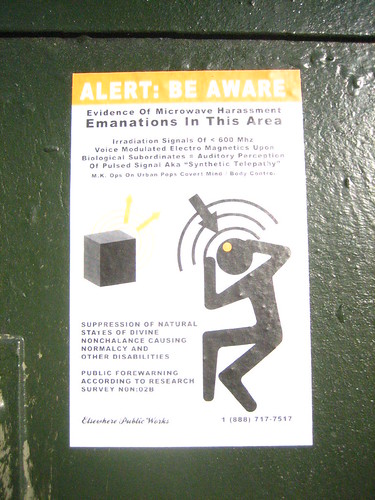
Monday, December 15, 2008
Hallelujah
Night starts too early and lasts deep into morning, waking up dull and heavy, the dark weighing on my chest. I want to burrow under the covers like my cat, nose first into warmth, the fingers of dreams lacing in and through my waking mind.
I stand in the kitchen staring at an empty pan and wonder at its meaning.
I have an appointment downtown, the city desperately decked in holiday cheer and screaming SALE SALE, bell-ringing Salvationeers and brass bands and shopping bags knocking against knees, shoppers looking nonplussed to find only one bag in hand, last year it was twenty, but even Santa's cinching the belt another notch.
I'm cranky and late and hungry, no time to dodge my way through the crowds to the library, just hope for a train soon and home to lunch.
Down in the Powell Street station a stringy guy in reindeer antlers sings "The Night They Drove Old Dixie Down" with his guitar case open and he's good, the song pulls at me, but I have a train to catch and deeper in the station now another busker, this one a girl.
She looks unlikely, all pudge and colorless hair, sitting cross-legged on the floor of the station, guitar in her lap, but I get closer and now I can hear her voice, breaking free of the station and soaring up above the street, people are standing where they are to listen. She's singing "Hallelujah" and that's it, that's almost all I can take. I'm going to break into tears right here in the station. She finishes the song and I dig around in my purse to find all the quarters I can to drop in her case. Someone else is whispering his awe to her and she just says thanks and turns the page in her music.
A night later and already it's full dark at five. I'm in a coffee shop before strolling to a party, enough time to work on rewrites and I hear the familiar opening, it's John Cale's version, Hallelujah, and this time I think, yeah. Maybe the universe is speaking. We're on the edge of solstice, the earth turns and - miraculously - the weight shifts. Sun begins to rise a little earlier and hang in the sky a little longer.
Just hold on another week and watch. Hallelujah.
Now I've heard there was a secret chord
That David played, and it pleased the Lord
But you don't really care for music, do you?
It goes like this
The fourth, the fifth
The minor fall, the major lift
The baffled king composing Hallelujah
Hallelujah
Hallelujah
Hallelujah
Hallelujah
Your faith was strong but you needed proof
You saw her bathing on the roof
Her beauty and the moonlight overthrew you
She tied you
To a kitchen chair
She broke your throne, and she cut your hair
And from your lips she drew the Hallelujah
Hallelujah
Hallelujah
Hallelujah
Hallelujah
Baby, I've been here before.
I know this room, I've walked this floor.
I used to live alone before I knew you.
I've seen your flag on the marble arch,
But love is not a victory march,
No it's a cold and it's a broken Hallelujah.
Hallelujah
Hallelujah
Hallelujah
Hallelujah
There was a time you let me know
What's really going on below,
Ah but now you never show it to me, do you?
Remember, yeah when I moved in you,
And the holy dove was moving too,
And every breath we drew was Hallelujah.
Hallelujah
Hallelujah
Hallelujah
Hallelujah
Maybe there's a God above,
All I ever learned from love
Is how to shoot at someone who outdrew you.
But it's not a cry that you hear at night,
It's not somebody who's seen the light
No it's a cold and it's a broken Hallelujah.
Hallelujah
Hallelujah
Hallelujah
Hallelujah
I did my best, it wasn't much.
I couldn't feel, so I learned to touch.
I've told the truth, I didn't come all this way to fool you.
Yeah even though it all went wrong
I'll stand right here before the Lord of Song
With nothing on my lips but Hallelujah.
Hallelujah, Hallelujah, Hallelujah, Hallelujah.
Hallelujah, Hallelujah, Hallelujah, Hallelujah.
I stand in the kitchen staring at an empty pan and wonder at its meaning.
I have an appointment downtown, the city desperately decked in holiday cheer and screaming SALE SALE, bell-ringing Salvationeers and brass bands and shopping bags knocking against knees, shoppers looking nonplussed to find only one bag in hand, last year it was twenty, but even Santa's cinching the belt another notch.
I'm cranky and late and hungry, no time to dodge my way through the crowds to the library, just hope for a train soon and home to lunch.
Down in the Powell Street station a stringy guy in reindeer antlers sings "The Night They Drove Old Dixie Down" with his guitar case open and he's good, the song pulls at me, but I have a train to catch and deeper in the station now another busker, this one a girl.
She looks unlikely, all pudge and colorless hair, sitting cross-legged on the floor of the station, guitar in her lap, but I get closer and now I can hear her voice, breaking free of the station and soaring up above the street, people are standing where they are to listen. She's singing "Hallelujah" and that's it, that's almost all I can take. I'm going to break into tears right here in the station. She finishes the song and I dig around in my purse to find all the quarters I can to drop in her case. Someone else is whispering his awe to her and she just says thanks and turns the page in her music.
A night later and already it's full dark at five. I'm in a coffee shop before strolling to a party, enough time to work on rewrites and I hear the familiar opening, it's John Cale's version, Hallelujah, and this time I think, yeah. Maybe the universe is speaking. We're on the edge of solstice, the earth turns and - miraculously - the weight shifts. Sun begins to rise a little earlier and hang in the sky a little longer.
Just hold on another week and watch. Hallelujah.
Now I've heard there was a secret chord
That David played, and it pleased the Lord
But you don't really care for music, do you?
It goes like this
The fourth, the fifth
The minor fall, the major lift
The baffled king composing Hallelujah
Hallelujah
Hallelujah
Hallelujah
Hallelujah
Your faith was strong but you needed proof
You saw her bathing on the roof
Her beauty and the moonlight overthrew you
She tied you
To a kitchen chair
She broke your throne, and she cut your hair
And from your lips she drew the Hallelujah
Hallelujah
Hallelujah
Hallelujah
Hallelujah
Baby, I've been here before.
I know this room, I've walked this floor.
I used to live alone before I knew you.
I've seen your flag on the marble arch,
But love is not a victory march,
No it's a cold and it's a broken Hallelujah.
Hallelujah
Hallelujah
Hallelujah
Hallelujah
There was a time you let me know
What's really going on below,
Ah but now you never show it to me, do you?
Remember, yeah when I moved in you,
And the holy dove was moving too,
And every breath we drew was Hallelujah.
Hallelujah
Hallelujah
Hallelujah
Hallelujah
Maybe there's a God above,
All I ever learned from love
Is how to shoot at someone who outdrew you.
But it's not a cry that you hear at night,
It's not somebody who's seen the light
No it's a cold and it's a broken Hallelujah.
Hallelujah
Hallelujah
Hallelujah
Hallelujah
I did my best, it wasn't much.
I couldn't feel, so I learned to touch.
I've told the truth, I didn't come all this way to fool you.
Yeah even though it all went wrong
I'll stand right here before the Lord of Song
With nothing on my lips but Hallelujah.
Hallelujah, Hallelujah, Hallelujah, Hallelujah.
Hallelujah, Hallelujah, Hallelujah, Hallelujah.
Tuesday, December 02, 2008
Weight
On the bus tonight, a young white woman in neat sweats is getting off at my stop. Her hair is in a bun. She stands at the top of the stairs as the light above the door turns green. She bends at the waist, pushing at the doors without treading on the stairs.
She pushes with thumb and finger on the handle, then folds her arm back against her chest, then reaches out to push again. You need to step on the stairs to open the doors, but she doesn't know this, leaning gingerly over the gap to push against the doors one more time.
I make my way around the other passengers, and step heavily on the stair. The doors spring open. The woman launches out and over the stairs without touching them. She lands on one foot, darting up and across the street before the bus can close its doors and release the brakes.
I watch her sprint away, shouldering my bags and lagging by nearly half a block already. She pauses once to look behind her as the bus pulls around the corner, then turns back, her tidy bun gleaming in the dark.
She pushes with thumb and finger on the handle, then folds her arm back against her chest, then reaches out to push again. You need to step on the stairs to open the doors, but she doesn't know this, leaning gingerly over the gap to push against the doors one more time.
I make my way around the other passengers, and step heavily on the stair. The doors spring open. The woman launches out and over the stairs without touching them. She lands on one foot, darting up and across the street before the bus can close its doors and release the brakes.
I watch her sprint away, shouldering my bags and lagging by nearly half a block already. She pauses once to look behind her as the bus pulls around the corner, then turns back, her tidy bun gleaming in the dark.
Sunday, November 23, 2008
A failure of imagination
The movement of the historical moment beneath my feet has shut me up lately. I chose early on to make this a literary blog, not a political blog, but every time I begin a post, all I can think about is politics. So let me get this out of the way.
I was moved and exhilarated at the election of Barack Obama a few weeks ago. The next day, however, that joy was tempered as it became clear that Proposition 8 was going to pass here in California. This particular issue was deeply personal for me.
I was raised LDS, and I am still officially a member of that church, although I have been inactive for many years. My family and many of my friends are active members in good standing. Watching the church of my birth and my family put so much energy into the passage of this proposition has been painful.
Maybe it is a failure of imagination on my part, but despite my best efforts, I cannot see the compelling reason to strip away the right of gay people to marry.
A comment on a friend's website asked, "Why do they want the word marriage so much?"
This focused it all down to a single point for me. To me the question is, "Why do you want to be married? Why do you want the word marriage?"
"They" are not so different from you. Gay people want the same things straight people want (and have the same wide spectrum of wants as well). Did you grow up dreaming of being married? Did you imagine what your wedding dress would look like? Did you pick out your colors and flowers before you ever met your intended?
Now imagine all of that is true. You are still you, having the same dreams you have always had. And you meet and fall in love with the person you want to spend your life with, the person that all those fantasies centered around. But the person you love is someone the world around you says is someone you can't marry. Maybe there are a large number of churches (though not all) who believe it is a sin for you to love that person.
Does any of that change your wishes? Do you choose to be untrue to yourself and your love, and try to love someone the world approves of?
Do you foist a false marriage on someone you don't love, you can't love, in order to gain the approval of the world? (And what, then, have you done to the innocent other in this false marriage?) In order to obtain full citizenship in your society? Or do you quietly remain single and humbly take what crumbs the adults will allow to fall from the table?
Why is marriage important? Because marriage is the only way we have to choose and build our own family. We are born into a family, or we may be adopted into one, but when we marry someone, each party is freely choosing the other. A marriage makes the person you love legally your kin. No other civil contract can do this.
For those who believe in the words of Jesus Christ, it can be said simply: "Do unto others as you would have them do unto you."
How would you react if a large group of people put vast amounts of money and energy into forbidding you to marry? Whatever else they may say, how loving would that seem to you?
Maybe my imagination has failed if I am unable to place myself in the position of the people who vigorously campaigned to make unlawful the marriages of many of my close friends, but if so, mine is not the only failure.
The ability to truly empathize is, I think, essential in a just society.
And here is where I see the problem of bringing politics in, because I can't end with just one issue. The prop 8 issue hit me close to where I live, but this should hit everyone:
5 at Guantanamo Ordered Released
Five men have been imprisoned and tortured by our government, and thus by all of us, for no reason at all. That we have allowed this to happen tells me that we have so very far to go. That we can, collectively, say that these people "deserved" this - that anyone "deserves" torture and no hope of justice - tells me that we have managed to convince ourselves that they are not people at all.
I'll go back to the way I usually write here. I can't write well or coherently about politics directly, but I hope that, at the bottom of every post, every little encounter I record, someone can see the fundamental reason I write: every human being is an individual with a soul. If your heart can beat for a moment with someone I see on the bus, maybe it can also beat with a man in a cell who has never seen his daughter, with a boy who dreams of being married one day, with a woman who wants to hold the hand of her wife in the hospital.
Update: I want to make absolutely clear that what I am talking about, what Prop 8 was about, is civil marriage. Religions are - and should remain - free to define what marriage means to them. Andrew Sullivan again puts it very well.
I was moved and exhilarated at the election of Barack Obama a few weeks ago. The next day, however, that joy was tempered as it became clear that Proposition 8 was going to pass here in California. This particular issue was deeply personal for me.
I was raised LDS, and I am still officially a member of that church, although I have been inactive for many years. My family and many of my friends are active members in good standing. Watching the church of my birth and my family put so much energy into the passage of this proposition has been painful.
Maybe it is a failure of imagination on my part, but despite my best efforts, I cannot see the compelling reason to strip away the right of gay people to marry.
A comment on a friend's website asked, "Why do they want the word marriage so much?"
This focused it all down to a single point for me. To me the question is, "Why do you want to be married? Why do you want the word marriage?"
"They" are not so different from you. Gay people want the same things straight people want (and have the same wide spectrum of wants as well). Did you grow up dreaming of being married? Did you imagine what your wedding dress would look like? Did you pick out your colors and flowers before you ever met your intended?
Now imagine all of that is true. You are still you, having the same dreams you have always had. And you meet and fall in love with the person you want to spend your life with, the person that all those fantasies centered around. But the person you love is someone the world around you says is someone you can't marry. Maybe there are a large number of churches (though not all) who believe it is a sin for you to love that person.
Does any of that change your wishes? Do you choose to be untrue to yourself and your love, and try to love someone the world approves of?
Do you foist a false marriage on someone you don't love, you can't love, in order to gain the approval of the world? (And what, then, have you done to the innocent other in this false marriage?) In order to obtain full citizenship in your society? Or do you quietly remain single and humbly take what crumbs the adults will allow to fall from the table?
Why is marriage important? Because marriage is the only way we have to choose and build our own family. We are born into a family, or we may be adopted into one, but when we marry someone, each party is freely choosing the other. A marriage makes the person you love legally your kin. No other civil contract can do this.
For those who believe in the words of Jesus Christ, it can be said simply: "Do unto others as you would have them do unto you."
How would you react if a large group of people put vast amounts of money and energy into forbidding you to marry? Whatever else they may say, how loving would that seem to you?
Maybe my imagination has failed if I am unable to place myself in the position of the people who vigorously campaigned to make unlawful the marriages of many of my close friends, but if so, mine is not the only failure.
The ability to truly empathize is, I think, essential in a just society.
And here is where I see the problem of bringing politics in, because I can't end with just one issue. The prop 8 issue hit me close to where I live, but this should hit everyone:
5 at Guantanamo Ordered Released
Five men have been imprisoned and tortured by our government, and thus by all of us, for no reason at all. That we have allowed this to happen tells me that we have so very far to go. That we can, collectively, say that these people "deserved" this - that anyone "deserves" torture and no hope of justice - tells me that we have managed to convince ourselves that they are not people at all.
I'll go back to the way I usually write here. I can't write well or coherently about politics directly, but I hope that, at the bottom of every post, every little encounter I record, someone can see the fundamental reason I write: every human being is an individual with a soul. If your heart can beat for a moment with someone I see on the bus, maybe it can also beat with a man in a cell who has never seen his daughter, with a boy who dreams of being married one day, with a woman who wants to hold the hand of her wife in the hospital.
Update: I want to make absolutely clear that what I am talking about, what Prop 8 was about, is civil marriage. Religions are - and should remain - free to define what marriage means to them. Andrew Sullivan again puts it very well.
Tuesday, November 04, 2008

Friday, October 24, 2008
Indian Summer
So sorry for the long silence! I'm back now and seem to have my feet under me again...
Walking to the main library on an autumn evening, the sun casting long shadows on the ground. I see two men in vigorous conversation, arms waving. As I get closer, I see they're speaking sign language. It is an argument. One man's gestures get larger and faster, like he wants to scoop the whole street into his arms. In sign language, this counts as shouting.
The other man gestures back, quietly. The first man drops his arms to his sides. They look at each other, and the first man opens his arms. The second man steps into his embrace. The sun outlines them as they hold each other, then slowly separate, their hands on each other's shoulders. The first man lifts one hand, touching his fingertips to his chin, then moves the hand out toward the other man.
This means "Thank you."
On the train home later that evening; it's dark outside, but a breath of gentle air washes in when the doors open. A punk gets on the train. Four-inch double mohawk, pierced eyebrow, lip, ears. Studded collar and tattoos covering his arms and neck. Leather wristbands.
He's talking on his cell phone.
"I know, I know. She took it with her, and I don't begrudge her that, you know? It's just, I miss her."
His eyes fill with tears. He looks down at his hands, listening to the voice at the other end.
"I don't want to lose her," he says, his voice going hoarse.
My skirt blows around my legs as the doors open, and I step out into the night.
Walking to the main library on an autumn evening, the sun casting long shadows on the ground. I see two men in vigorous conversation, arms waving. As I get closer, I see they're speaking sign language. It is an argument. One man's gestures get larger and faster, like he wants to scoop the whole street into his arms. In sign language, this counts as shouting.
The other man gestures back, quietly. The first man drops his arms to his sides. They look at each other, and the first man opens his arms. The second man steps into his embrace. The sun outlines them as they hold each other, then slowly separate, their hands on each other's shoulders. The first man lifts one hand, touching his fingertips to his chin, then moves the hand out toward the other man.
This means "Thank you."
On the train home later that evening; it's dark outside, but a breath of gentle air washes in when the doors open. A punk gets on the train. Four-inch double mohawk, pierced eyebrow, lip, ears. Studded collar and tattoos covering his arms and neck. Leather wristbands.
He's talking on his cell phone.
"I know, I know. She took it with her, and I don't begrudge her that, you know? It's just, I miss her."
His eyes fill with tears. He looks down at his hands, listening to the voice at the other end.
"I don't want to lose her," he says, his voice going hoarse.
My skirt blows around my legs as the doors open, and I step out into the night.
Thursday, September 25, 2008
Why I haven't been blogging
I'm volunteer coordinator for this:

If you're in San Francisco, check it out.
If you're in San Francisco, check it out.
Friday, August 29, 2008
A little hope
Naked hope, so sharp it's painful.
When I heard him speak four years ago, I felt the same thing. I wished - despairingly - that we were the kind of country that could elect someone like him President.
Yeah, he's just a guy, just a politician. I know this, too well. He won't save us. But if we take a chance on someone like this - someone who appeals to our better lights, who will say, "I am my brother's keeper" - if we take this chance, maybe we can save ourselves.
Maybe it will show we haven't given up on ourselves yet.
When I heard him speak four years ago, I felt the same thing. I wished - despairingly - that we were the kind of country that could elect someone like him President.
Yeah, he's just a guy, just a politician. I know this, too well. He won't save us. But if we take a chance on someone like this - someone who appeals to our better lights, who will say, "I am my brother's keeper" - if we take this chance, maybe we can save ourselves.
Maybe it will show we haven't given up on ourselves yet.
Friday, August 22, 2008
Boneshaker
Walking to the bus from a doctor's appointment, I turn left, on impulse, down a small side street. It's mid-morning on a weekday, and there are no cars on the street.
I pass a domed building with wide, curving steps to the front door. The steps and Doric columns are pinkish marble. A small plaque tells me it's the Armenian Community Center. Beside it is a small chapel with a quiet garden in front, Gregory the Illuminator, Armenian Church. A young man, bag over his shoulder, turns sharply and disappears into the chapel. I think about going in, sitting in a cool pew, the scent of incense. Are non-Armenians welcome? What is the protocol? Does one cross oneself?
I turn right on Euclid Avenue. Something glides silently into my peripheral vision, snags at my eye, and I turn to look. It's a man in full bicycle-racing gear: lycra shorts and numbered jersey, sleek helmet that gives a feeling of speed. He is lean and muscled. He's riding an antique velocipede, a boneshaker, the front wheel almost as tall as me, holding himself still and upright, he moves at a stately pace down the road.
Two men are washing windows on my side of the street, one at the top of a ladder, the other holding the bottom. The man holding the ladder watches the velocipede pass, he can look at nothing else, he and I pause, and watch. The bicyclist stops at a light, balances for a few precious seconds, creeping forward and back, but finally he has to jump down. The light turns green and he's neatly in the seat again, he's moved so swiftly that I missed the moment. The window washer and I watch him turn and disappear around the corner.
I breathe in and breathe out, a space opened up inside my head, and I walk through soft morning air toward the bus.
I pass a domed building with wide, curving steps to the front door. The steps and Doric columns are pinkish marble. A small plaque tells me it's the Armenian Community Center. Beside it is a small chapel with a quiet garden in front, Gregory the Illuminator, Armenian Church. A young man, bag over his shoulder, turns sharply and disappears into the chapel. I think about going in, sitting in a cool pew, the scent of incense. Are non-Armenians welcome? What is the protocol? Does one cross oneself?
I turn right on Euclid Avenue. Something glides silently into my peripheral vision, snags at my eye, and I turn to look. It's a man in full bicycle-racing gear: lycra shorts and numbered jersey, sleek helmet that gives a feeling of speed. He is lean and muscled. He's riding an antique velocipede, a boneshaker, the front wheel almost as tall as me, holding himself still and upright, he moves at a stately pace down the road.
Two men are washing windows on my side of the street, one at the top of a ladder, the other holding the bottom. The man holding the ladder watches the velocipede pass, he can look at nothing else, he and I pause, and watch. The bicyclist stops at a light, balances for a few precious seconds, creeping forward and back, but finally he has to jump down. The light turns green and he's neatly in the seat again, he's moved so swiftly that I missed the moment. The window washer and I watch him turn and disappear around the corner.
I breathe in and breathe out, a space opened up inside my head, and I walk through soft morning air toward the bus.
Sunday, August 10, 2008
Nostalgia is a drug, part 2
Continued right away to give Geo a little something to read while she heals...
We ask the desk clerk (the twin who wears the dark glasses) for a Do Not Disturb sign. At least I think that's what I ask him. Behind his sunglasses, he gives no sign of even hearing me. I describe to him, in my parody of French, our adventure of the morning. We don't want another adventure, I believe I tell him.
He nods quietly, his sunglasses reflecting the light from the street.
We don't ride the metro in Paris. This surprises me a bit; I romanticize the metro - symbol of childhood freedom - it represents a big piece of my Paris memories. And I know how to find my way around from metro stops. Maybe that's one reason. I don't want to rely on ancient habits to find my childhood. I want a new route there.
And neither of us is interested in going underground and getting on another vehicle. We both want to walk. We've been cooped up too long; we want to wander and lose ourselves.
Paris is the place to lose yourself. People leave you alone. I appreciate this. When I was here as a kid, my family tried to teach me how to wear a "metro face." A metro face is stone cold, man. It tells strangers that you are not a soft touch, you are not interested in a date or a cheap watch. My sister had a great metro face, like a door coming down, shutting off her beautiful features behind bulletproof glass like the Mona Lisa. She looked like she was born here.
I looked like a goofy small-town kid from Utah. I'd give my gap-toothed grin to anyone, look people in the eye, chat with someone who tried to engage me. But here's the thing. Parisians don't engage.
I still have no metro face. I can shut it down some, if I'm paying close attention, but it takes a lot of concentration, and I can't keep it up for long. This gets me in trouble all over the world. Most often, it just means I get into some interesting conversations with colorful people. But it can be tiring, after a while. By the time we got to Paris, I was exhausted.
And I got to rest. In Paris, I can look people in the eye, I can smile at them, and they don't see it as an invitation. Parisians don't engage. This means a genuine rest for me. I can let my face do what it wants, and nobody expects anything from me.
I could have used a metro face in Provo much more than I need one in Paris.
As we walk, my bones loosen in their joints. I walk easily beside Mr. Billy, opening up, not caring where we go or how long it takes to get there. We follow side streets because they're small and curving and I see the wide doors I remember from this quarter. Behind these doors are broad courtyards and stairs leading to apartments or boarding-house rooms.
"Hey," says Mr. Billy, "I think the Luxembourg Gardens are right down there."
He points down a street. I can feel the past barreling in toward my chest; the pension was at one corner of Luxembourg.
We walk down the street, and my eyes are eating everything in our path.
"That's the metro stop," I say, pointing. I remember this. Climbing up and out of the metro onto a garden island in the street. I slow down. Many of the wide doors I remember have been replaced by slick storefronts. Children's clothing. High-end chocolate. None of this was here before, and I start to doubt myself. Maybe this isn't it. It's been thirty years. How would I know?
A paper store, called Marie Papier. This makes me smile, just a fraction. My mom's name was Marie, and she was a poet. A little joke, just for me.
Across the street is a patisserie. It's more than thirty years old, and it hasn't changed, it hasn't changed at all. I'm nine years old and pressing my forehead against the glass, counting my centimes for a mille feuilles or a chocolate eclair, dancing my eyes over cakes and trills of chocolate and fresh raspberries.

We're here. There, to the left, is the pension itself. It's a nondescript building, but for me it breathes and speaks stories into my mind. I can see the row of windows on the second floor, where the classrooms were. I would hang over the railing during class breaks to see what was happening in the street. The back window, where the French student stayed - the only one who wasn't part of our group - I had a crush on him. I don't remember his name, but he wore a scarf around his neck and little round glasses, and he would tell me, in English, that he was "teer-ed", and I would reply that I had fatigue.
I squeeze Mr. Billy's hand, drunk on memories. It's several minutes before I can move.
More to come...in the meantime, check out Mr. Billy's take on our adventures in France
We ask the desk clerk (the twin who wears the dark glasses) for a Do Not Disturb sign. At least I think that's what I ask him. Behind his sunglasses, he gives no sign of even hearing me. I describe to him, in my parody of French, our adventure of the morning. We don't want another adventure, I believe I tell him.
He nods quietly, his sunglasses reflecting the light from the street.
We don't ride the metro in Paris. This surprises me a bit; I romanticize the metro - symbol of childhood freedom - it represents a big piece of my Paris memories. And I know how to find my way around from metro stops. Maybe that's one reason. I don't want to rely on ancient habits to find my childhood. I want a new route there.
And neither of us is interested in going underground and getting on another vehicle. We both want to walk. We've been cooped up too long; we want to wander and lose ourselves.
Paris is the place to lose yourself. People leave you alone. I appreciate this. When I was here as a kid, my family tried to teach me how to wear a "metro face." A metro face is stone cold, man. It tells strangers that you are not a soft touch, you are not interested in a date or a cheap watch. My sister had a great metro face, like a door coming down, shutting off her beautiful features behind bulletproof glass like the Mona Lisa. She looked like she was born here.
I looked like a goofy small-town kid from Utah. I'd give my gap-toothed grin to anyone, look people in the eye, chat with someone who tried to engage me. But here's the thing. Parisians don't engage.
I still have no metro face. I can shut it down some, if I'm paying close attention, but it takes a lot of concentration, and I can't keep it up for long. This gets me in trouble all over the world. Most often, it just means I get into some interesting conversations with colorful people. But it can be tiring, after a while. By the time we got to Paris, I was exhausted.
And I got to rest. In Paris, I can look people in the eye, I can smile at them, and they don't see it as an invitation. Parisians don't engage. This means a genuine rest for me. I can let my face do what it wants, and nobody expects anything from me.
I could have used a metro face in Provo much more than I need one in Paris.
As we walk, my bones loosen in their joints. I walk easily beside Mr. Billy, opening up, not caring where we go or how long it takes to get there. We follow side streets because they're small and curving and I see the wide doors I remember from this quarter. Behind these doors are broad courtyards and stairs leading to apartments or boarding-house rooms.
"Hey," says Mr. Billy, "I think the Luxembourg Gardens are right down there."
He points down a street. I can feel the past barreling in toward my chest; the pension was at one corner of Luxembourg.
We walk down the street, and my eyes are eating everything in our path.
"That's the metro stop," I say, pointing. I remember this. Climbing up and out of the metro onto a garden island in the street. I slow down. Many of the wide doors I remember have been replaced by slick storefronts. Children's clothing. High-end chocolate. None of this was here before, and I start to doubt myself. Maybe this isn't it. It's been thirty years. How would I know?
A paper store, called Marie Papier. This makes me smile, just a fraction. My mom's name was Marie, and she was a poet. A little joke, just for me.
Across the street is a patisserie. It's more than thirty years old, and it hasn't changed, it hasn't changed at all. I'm nine years old and pressing my forehead against the glass, counting my centimes for a mille feuilles or a chocolate eclair, dancing my eyes over cakes and trills of chocolate and fresh raspberries.
We're here. There, to the left, is the pension itself. It's a nondescript building, but for me it breathes and speaks stories into my mind. I can see the row of windows on the second floor, where the classrooms were. I would hang over the railing during class breaks to see what was happening in the street. The back window, where the French student stayed - the only one who wasn't part of our group - I had a crush on him. I don't remember his name, but he wore a scarf around his neck and little round glasses, and he would tell me, in English, that he was "teer-ed", and I would reply that I had fatigue.
I squeeze Mr. Billy's hand, drunk on memories. It's several minutes before I can move.
More to come...in the meantime, check out Mr. Billy's take on our adventures in France
Nostalgia is a drug
Our first morning in Paris, and we're sleeping in. Blissfully, hedonistically, sleeping late. Until we hear the doorknob rattle. We both scramble up, clutching the bedclothes to our chests, staring at the door.
"The maid?" says Mr. Billy.
"We have the key," I say.
In Parisian hotels, you leave your key at the front desk when you go out. No danger of losing the key, and the hotel always knows when you're in your room. No "Do not disturb" signs, but that shouldn't be a problem, should it?
The doorknob stops, and we stare for a moment before breathing, sighing, then snuggling back under the covers. The fingers of a dream are just creeping over my brain when the rattling starts up again. And then the unmistakable sound of a key sliding into a lock.
We leap into action: I lunge for the door, Mr. Billy for the safety of the bathroom.
"Nononononononon" I babble through the door, holding tight to the knob. The door opens an inch and I search the dusty files in my brain for the right phrase:
"Nous sommes ici! Nu! Nous sommes nu!"
I'm unsure if an announcement that we are naked will be enough of a deterrent, but the door closes at last, and I hear footsteps recede down the hall. Mr. Billy peeks around the bathroom door and I collapse on the bed, laughing hysterically.
"Well, we're up now. Wanna go see Paris?"
We have three days in Paris. No agenda, no appointments. We'd planned this break in the city without any ideas of hitting the tourist hot spots. In a way, Paris had been a big blank spot in my idea of our trip to France. We have no plans at all. We step out into the city, and I realize that we must not be far from the pension where I attended school when I lived here as a kid.
I use "attended school" loosely in this context. I was nine, and my dad was directing a University Study Abroad here. "School" was college classes at the pension where the students stayed. My family stayed in an apartment a few metro stops away. I completed the 4th grade via home study, and attended the college courses for fun. I got an A+ in French, but my 12-year-old brother showed me up with an A+++.
We were in Paris for less than a year, but that time was crazily overbalanced in my memory. Up until then, I was a kid from small-ish college town Provo, Utah. I could walk to my best friend's house & play in the field across the street. We could walk to school together and ride our bikes to the swimming pool, but to really get anywhere, I had to be driven.
One week in Paris with a metro map and a carte orange, and I could go anywhere I wanted in the city - all by myself. I hung out with college kids. I ate crepes made fresh from a street cart. My brother and I did the shopping for the whole family, because we'd picked up the language quicker than the older folks. It was paradise. This word has been overused, its juice and flavor squeezed out, but it was paradise in the full, fat, juicy sense of the word.
So I feign nonchalance when I propose to Mr. Billy that we try to find the pension. I don't want to make it a mission; that fear of disappointment is still strong, and most of what I want is unstructured time with Mr. Billy. We wander as aimless as eight-year-olds, pointing at buildings and eyeglass designs. We watch Parisians on the shared bicycles that belong to the city; you can pick one up just about anywhere, insert a token, and ride it to another part of the city, then drop it off.
A lot of people ride scooters. Helmet designs are particularly attractive here.
We wander, and we stop to eat hot crepes on the street, and we casually glance at the maps that are all over the city. I laugh when I see we've been walking in exactly the opposite direction from the pension.
To be continued...
"The maid?" says Mr. Billy.
"We have the key," I say.
In Parisian hotels, you leave your key at the front desk when you go out. No danger of losing the key, and the hotel always knows when you're in your room. No "Do not disturb" signs, but that shouldn't be a problem, should it?
The doorknob stops, and we stare for a moment before breathing, sighing, then snuggling back under the covers. The fingers of a dream are just creeping over my brain when the rattling starts up again. And then the unmistakable sound of a key sliding into a lock.
We leap into action: I lunge for the door, Mr. Billy for the safety of the bathroom.
"Nononononononon" I babble through the door, holding tight to the knob. The door opens an inch and I search the dusty files in my brain for the right phrase:
"Nous sommes ici! Nu! Nous sommes nu!"
I'm unsure if an announcement that we are naked will be enough of a deterrent, but the door closes at last, and I hear footsteps recede down the hall. Mr. Billy peeks around the bathroom door and I collapse on the bed, laughing hysterically.
"Well, we're up now. Wanna go see Paris?"
We have three days in Paris. No agenda, no appointments. We'd planned this break in the city without any ideas of hitting the tourist hot spots. In a way, Paris had been a big blank spot in my idea of our trip to France. We have no plans at all. We step out into the city, and I realize that we must not be far from the pension where I attended school when I lived here as a kid.
I use "attended school" loosely in this context. I was nine, and my dad was directing a University Study Abroad here. "School" was college classes at the pension where the students stayed. My family stayed in an apartment a few metro stops away. I completed the 4th grade via home study, and attended the college courses for fun. I got an A+ in French, but my 12-year-old brother showed me up with an A+++.
We were in Paris for less than a year, but that time was crazily overbalanced in my memory. Up until then, I was a kid from small-ish college town Provo, Utah. I could walk to my best friend's house & play in the field across the street. We could walk to school together and ride our bikes to the swimming pool, but to really get anywhere, I had to be driven.
One week in Paris with a metro map and a carte orange, and I could go anywhere I wanted in the city - all by myself. I hung out with college kids. I ate crepes made fresh from a street cart. My brother and I did the shopping for the whole family, because we'd picked up the language quicker than the older folks. It was paradise. This word has been overused, its juice and flavor squeezed out, but it was paradise in the full, fat, juicy sense of the word.
So I feign nonchalance when I propose to Mr. Billy that we try to find the pension. I don't want to make it a mission; that fear of disappointment is still strong, and most of what I want is unstructured time with Mr. Billy. We wander as aimless as eight-year-olds, pointing at buildings and eyeglass designs. We watch Parisians on the shared bicycles that belong to the city; you can pick one up just about anywhere, insert a token, and ride it to another part of the city, then drop it off.
A lot of people ride scooters. Helmet designs are particularly attractive here.
We wander, and we stop to eat hot crepes on the street, and we casually glance at the maps that are all over the city. I laugh when I see we've been walking in exactly the opposite direction from the pension.
To be continued...
Saturday, July 19, 2008
I love Paris in the springtime
I was ready to be disappointed. The last time I was in Paris, I was twenty-one years old. I lived here when I was nine. But with age comes disillusion and cold, mature assessment. Paris would not - could not - wow me again.
Boy, was I wrong.
It starts the minute we leave the train station. I spy La Rotonde and the Café de Flore out the cab windows. It's all I can do to keep from squealing. Simone de Beauvoir and Sartre used to hang out here. We step out onto the narrow street and that old Paris smell - diesel exhaust and chocolate and a soft breath from somewhere above the buildings - spirals into my brain and sets the fireworks going.
We drag our bags behind us (the cab was unable to pull directly up to the hotel door) to our little hotel on the corner of the Rue d'Odessa. We learn later that this is where the finalists for "Nouvelle Star," the French version of "American Idol" are staying, but we would never have known: the place is small and sleepy. The desk clerks appear to be identical twins; one wears dark glasses. The elevator can only hold Mr. Billy with the bags, so I take the scenic route up the curling staircase.
I lean out the window of our tiny room. To my right is Montparnasse tower, and directly below are sidewalk cafés.
"Let's go out and walk around," I say to Mr. Billy. I feel like I'm nine years old again, or twenty-one. I bounce on my toes. "Let's go see Paris."
And so we do.
Boy, was I wrong.
It starts the minute we leave the train station. I spy La Rotonde and the Café de Flore out the cab windows. It's all I can do to keep from squealing. Simone de Beauvoir and Sartre used to hang out here. We step out onto the narrow street and that old Paris smell - diesel exhaust and chocolate and a soft breath from somewhere above the buildings - spirals into my brain and sets the fireworks going.
We drag our bags behind us (the cab was unable to pull directly up to the hotel door) to our little hotel on the corner of the Rue d'Odessa. We learn later that this is where the finalists for "Nouvelle Star," the French version of "American Idol" are staying, but we would never have known: the place is small and sleepy. The desk clerks appear to be identical twins; one wears dark glasses. The elevator can only hold Mr. Billy with the bags, so I take the scenic route up the curling staircase.
I lean out the window of our tiny room. To my right is Montparnasse tower, and directly below are sidewalk cafés.
"Let's go out and walk around," I say to Mr. Billy. I feel like I'm nine years old again, or twenty-one. I bounce on my toes. "Let's go see Paris."
And so we do.
Saturday, July 12, 2008
You gotta get in where you fit in
To get to the main branch of the library from my doctor's office, I walk through the Tenderloin.
Past the legit theaters on Geary ('Tis a Pity She's a Whore, A Chorus Line, a one-man show about Shakespeare), then left on Hyde. It's morning still. A man walking toward me has a vivid bruise over his right eye, staining eyelid, brow, and all the way up to the top of his bald head. His toothless cheeks suck in against his gums.
Someone whistles behind me. I don't turn. They whistle again, and a skinny white guy at the next corner turns to grin past me. He raises a chin. A voice from behind me asks how his night went. The man across the street chuckles. The light changes, and I cross toward him, seeing the net of scars across his cheek and jaw. His hair stands out in tufts.
"You find your pot, huh?" the voice behind me calls.
He nods vaguely, grinning, and waves them off, crossing against the light. He heads toward the mini-park, a tiny green space tucked in among the buildings.
Ahead of me is a woman with bright blond hair hanging to her shoulders. She wears shining burgundy lycra tights under a tiny black miniskirt. A blue and green scarf is tied around one ankle, and she wobbles slightly in her green heels. I look for her face as we pass storefront windows, but all I can see are her big Jackie-O sunglasses.
At the library, volunteers are unloading books onto tables out front: "Linux for Dummies" and "Europe on $5 a Day." Passers-by gaze at the books, and the volunteers work silently.
On the front door is a notice - the library is closed until noon. It's a long time until noon.
I walk toward the Muni stop, disappointed. A man sitting on the library's low stone wall catches my eye. He looks big and healthy, and he smiles widely at me. He wears a knit cap with bright orange flames that stand out against his blue-black skin. It looks like a graphic representation of his thoughts.
"You gotta get in where you fit in," he says to me. "If you don't, that's it!"
I smile back at him and nod. The sun shines out from behind a cloud, and I head for my train.
Past the legit theaters on Geary ('Tis a Pity She's a Whore, A Chorus Line, a one-man show about Shakespeare), then left on Hyde. It's morning still. A man walking toward me has a vivid bruise over his right eye, staining eyelid, brow, and all the way up to the top of his bald head. His toothless cheeks suck in against his gums.
Someone whistles behind me. I don't turn. They whistle again, and a skinny white guy at the next corner turns to grin past me. He raises a chin. A voice from behind me asks how his night went. The man across the street chuckles. The light changes, and I cross toward him, seeing the net of scars across his cheek and jaw. His hair stands out in tufts.
"You find your pot, huh?" the voice behind me calls.
He nods vaguely, grinning, and waves them off, crossing against the light. He heads toward the mini-park, a tiny green space tucked in among the buildings.
Ahead of me is a woman with bright blond hair hanging to her shoulders. She wears shining burgundy lycra tights under a tiny black miniskirt. A blue and green scarf is tied around one ankle, and she wobbles slightly in her green heels. I look for her face as we pass storefront windows, but all I can see are her big Jackie-O sunglasses.
At the library, volunteers are unloading books onto tables out front: "Linux for Dummies" and "Europe on $5 a Day." Passers-by gaze at the books, and the volunteers work silently.
On the front door is a notice - the library is closed until noon. It's a long time until noon.
I walk toward the Muni stop, disappointed. A man sitting on the library's low stone wall catches my eye. He looks big and healthy, and he smiles widely at me. He wears a knit cap with bright orange flames that stand out against his blue-black skin. It looks like a graphic representation of his thoughts.
"You gotta get in where you fit in," he says to me. "If you don't, that's it!"
I smile back at him and nod. The sun shines out from behind a cloud, and I head for my train.
Friday, July 04, 2008
4th of July
Monday, June 30, 2008
My doctor ordered me to take a vacation
...a real vacation, he said. No obligations, no running around. A good, solid rest.
No problem, I said. I'm going to France.
A direct flight is entirely too expensive, so we fly through Montreal. Nine o'clock in the morning on Sunday, we are on our way to the airport. At security, Mr. Billy is pulled aside. Suspicious character, Mr. Billy. Shifty eyes and whatnot.
He walks away with an official airport security shoehorn in his pocket. Thanks, security guys!
Eight hours or so later, we're in Montreal, or so they tell us. It's French-language training wheels. We wander through the clean, modern airport, the Limbo of air travel. Duty Free, bars, restaurants, endless shining hallways.
We are stuffed into another metal tube with wings, shaken and buzzed and fed and movied for another seven hours or twelve hours or fifteen days. Plastic shades are lowered over oval windows, and some people sleep.
Sleep does not come for us.
We touch earth at last. Paris. My head rings, a long, sustained note.
The training wheels are off, now, and my brain struggles to come up with the language I once knew. Mr. Billy has no French, so it's all mine to fuck up.
We follow the signs to the train station, down in the belly of the airport. We're scheduled to meet my dad on the Côte d'Azur this evening. It's Monday afternoon, local time.
We find the station. Victory! Now, we need to buy train tickets. TGV - Very Big Fast - the bullet train south. There are kiosks and vending machines and counters and signs and signs and my brain rings and the words mean nothing. Like writing in dreams, the words shift and change the moment I think I've decoded them. I leave Mr. Billy with the bags while I try to find something I can understand.
There, a queue of people, a sign that says something like what I need, I can't even form the question in English. I stand in line and I am standing in line for a lifetime and then I'm at the front of it. I walk up to the man at the counter and try my thirty-years rusty French.
"Two tickets, if you please, for San Raphael. Or Frejus."
He answers me in English. The train leaves in half an hour. All is well.
"Don't leave me for so long, next time," says Mr. Billy when I return. He's been sitting here, prisoner with bags. No language, no idea where I am. I'm hungry and thirsty, but don't dare spend a single precious Euro cent. The train tickets were much more than we expected. I can't even process the exchange rate. We can't afford this trip, not even close. What was I thinking?
There are no drinking fountains.
It's all right, though, our train is coming. We find the correct platform, we know which car we need to board. It's assigned seating on the TGV. The train arrives, and we look for our car.
No, we're at the wrong end of the train. We run the length of the platform. The car numbers are going the wrong way. No, somehow we missed our car. The note sings in my head, and thoughts are slow to swim to the surface. We should just get on, somewhere, but I can't articulate the thought, can't act on it. We're running, dragging our suitcases. I can't even see a door that's open, all we need is an open door, but it's too late, all the doors close, we're running and the train is moving, pulling away.
I can't speak, French or English. I make a panicked face at the attendants on the platform. They shrug at me. What's the fuss, they say. There'll be another train in twenty minutes.
Okay, okay, twenty minutes. I can deal with that. I'd better see if I need to change our tickets, I say to Mr. Billy. I have to leave him alone again. Back up to the queue. The minutes are ticking away. I get to the counter just in time. The platform attendants lied. It's another three hours until the next train.
 We get to know the station very well. You have to pay to use the toilet. You have to pay for water you can drink. We sit, and we wait.
The train is twenty minutes late. We have to transfer in Marseilles. No problem; we have an hour between trains.
The train arrives thirty minutes late, and we get on the right car. We'll be all right now.
We watch the countryside out the window, but nothing sinks in. My ears sing. I'm tracking our progress on a map. The sun goes down. The next stop is Marseilles. It's dark outside, and the train slows, then stops. We look at the man across from us. He shrugs.
Some knocks. A clang. A loud report. A voice comes on the intercom. I can't understand these things in the U.S., let alone here. The announcer monologues. Clearly, it's quite a story. The man across from us looks at us for a moment.
"They don't know what's wrong," he says.
The process repeats. Knocks, clangs, the engine lurches, then silence. The voice monologues.
"They still don't know what's wrong," says our companion.
Again the ruckus, again the monologue. It's almost time for our transfer.
"They have no power," says the man across from us. He explains that we should still make our transfer - a lot of people are in the same boat, we just need to follow them.
The train begins to roll. The engine doesn't start up; they must have realized that there was enough of a slope to coast into the station. Softly as a dream, we pass graffitied walls and warehouses, and slide into the station.
We fall out of the train in the crush of bodies, dragging our corpse-suitcases. There are uniformed rail employees waiting on the platform.
"Transfer to St. Raphael?" I say, in French.
"Hurry!" says the rail worker. "It's leaving! Hurry up, hurry up!"
We step up the pace, rushing along with the crowd. The crowd rushes through the train station and out into the parking lot. Mr. Billy and I turn around, rushing back the way we came. There's the train, I see it now, we're running toward the train as it pulls away from the platform.
French comes flowing out of my mouth. I curse the rail worker eloquently.
"I told you to hurry," she says, shrugging.
"You didn't say where. Apparently that was too hard for you. Is your arm broken? Are you unable to point the way to the platform? I asked you about our transfer and all you said was hurry up. This was not helpful!"
She shrugs.
It's almost midnight, and we're in the Marseilles train station. The next train is tomorrow morning. I do what any grownup would do. I call Daddy.
"Don't worry," he says, "We'll pick you up."
It's more than an hour's drive, and my seventy-something-year-old Dad cheerfully suggests getting on the road at midnight to rescue us.
I find a bathroom (a pay bathroom, taking only coins, which requires me to buy water at McDonald's to get some change first), lock myself in the stall, and cry.
Mr. Billy is waiting out at the curb for me. We stare into the Marseilles night, nodding at the cat-sized rats that keep us company, and wait for Dad to arrive.
No problem, I said. I'm going to France.
A direct flight is entirely too expensive, so we fly through Montreal. Nine o'clock in the morning on Sunday, we are on our way to the airport. At security, Mr. Billy is pulled aside. Suspicious character, Mr. Billy. Shifty eyes and whatnot.
He walks away with an official airport security shoehorn in his pocket. Thanks, security guys!
Eight hours or so later, we're in Montreal, or so they tell us. It's French-language training wheels. We wander through the clean, modern airport, the Limbo of air travel. Duty Free, bars, restaurants, endless shining hallways.
We are stuffed into another metal tube with wings, shaken and buzzed and fed and movied for another seven hours or twelve hours or fifteen days. Plastic shades are lowered over oval windows, and some people sleep.
Sleep does not come for us.
We touch earth at last. Paris. My head rings, a long, sustained note.
The training wheels are off, now, and my brain struggles to come up with the language I once knew. Mr. Billy has no French, so it's all mine to fuck up.
We follow the signs to the train station, down in the belly of the airport. We're scheduled to meet my dad on the Côte d'Azur this evening. It's Monday afternoon, local time.
We find the station. Victory! Now, we need to buy train tickets. TGV - Very Big Fast - the bullet train south. There are kiosks and vending machines and counters and signs and signs and my brain rings and the words mean nothing. Like writing in dreams, the words shift and change the moment I think I've decoded them. I leave Mr. Billy with the bags while I try to find something I can understand.
There, a queue of people, a sign that says something like what I need, I can't even form the question in English. I stand in line and I am standing in line for a lifetime and then I'm at the front of it. I walk up to the man at the counter and try my thirty-years rusty French.
"Two tickets, if you please, for San Raphael. Or Frejus."
He answers me in English. The train leaves in half an hour. All is well.
"Don't leave me for so long, next time," says Mr. Billy when I return. He's been sitting here, prisoner with bags. No language, no idea where I am. I'm hungry and thirsty, but don't dare spend a single precious Euro cent. The train tickets were much more than we expected. I can't even process the exchange rate. We can't afford this trip, not even close. What was I thinking?
There are no drinking fountains.
It's all right, though, our train is coming. We find the correct platform, we know which car we need to board. It's assigned seating on the TGV. The train arrives, and we look for our car.
No, we're at the wrong end of the train. We run the length of the platform. The car numbers are going the wrong way. No, somehow we missed our car. The note sings in my head, and thoughts are slow to swim to the surface. We should just get on, somewhere, but I can't articulate the thought, can't act on it. We're running, dragging our suitcases. I can't even see a door that's open, all we need is an open door, but it's too late, all the doors close, we're running and the train is moving, pulling away.
I can't speak, French or English. I make a panicked face at the attendants on the platform. They shrug at me. What's the fuss, they say. There'll be another train in twenty minutes.
Okay, okay, twenty minutes. I can deal with that. I'd better see if I need to change our tickets, I say to Mr. Billy. I have to leave him alone again. Back up to the queue. The minutes are ticking away. I get to the counter just in time. The platform attendants lied. It's another three hours until the next train.
We get to know the station very well. You have to pay to use the toilet. You have to pay for water you can drink. We sit, and we wait.The train is twenty minutes late. We have to transfer in Marseilles. No problem; we have an hour between trains.
The train arrives thirty minutes late, and we get on the right car. We'll be all right now.
We watch the countryside out the window, but nothing sinks in. My ears sing. I'm tracking our progress on a map. The sun goes down. The next stop is Marseilles. It's dark outside, and the train slows, then stops. We look at the man across from us. He shrugs.
Some knocks. A clang. A loud report. A voice comes on the intercom. I can't understand these things in the U.S., let alone here. The announcer monologues. Clearly, it's quite a story. The man across from us looks at us for a moment.
"They don't know what's wrong," he says.
The process repeats. Knocks, clangs, the engine lurches, then silence. The voice monologues.
"They still don't know what's wrong," says our companion.
Again the ruckus, again the monologue. It's almost time for our transfer.
"They have no power," says the man across from us. He explains that we should still make our transfer - a lot of people are in the same boat, we just need to follow them.
The train begins to roll. The engine doesn't start up; they must have realized that there was enough of a slope to coast into the station. Softly as a dream, we pass graffitied walls and warehouses, and slide into the station.
We fall out of the train in the crush of bodies, dragging our corpse-suitcases. There are uniformed rail employees waiting on the platform.
"Transfer to St. Raphael?" I say, in French.
"Hurry!" says the rail worker. "It's leaving! Hurry up, hurry up!"
We step up the pace, rushing along with the crowd. The crowd rushes through the train station and out into the parking lot. Mr. Billy and I turn around, rushing back the way we came. There's the train, I see it now, we're running toward the train as it pulls away from the platform.
French comes flowing out of my mouth. I curse the rail worker eloquently.
"I told you to hurry," she says, shrugging.
"You didn't say where. Apparently that was too hard for you. Is your arm broken? Are you unable to point the way to the platform? I asked you about our transfer and all you said was hurry up. This was not helpful!"
She shrugs.
It's almost midnight, and we're in the Marseilles train station. The next train is tomorrow morning. I do what any grownup would do. I call Daddy.
"Don't worry," he says, "We'll pick you up."
It's more than an hour's drive, and my seventy-something-year-old Dad cheerfully suggests getting on the road at midnight to rescue us.
I find a bathroom (a pay bathroom, taking only coins, which requires me to buy water at McDonald's to get some change first), lock myself in the stall, and cry.
Mr. Billy is waiting out at the curb for me. We stare into the Marseilles night, nodding at the cat-sized rats that keep us company, and wait for Dad to arrive.
Saturday, May 31, 2008
Sudden fall, part 2
(Writing from a seaside villa in France. Life is grand, for you kind and hardy souls still reading. A break was called for, and a break this is. The story from before, however, continues...)
"I think I might've cracked a tooth," I say from the bathroom. I'm inspecting the damage to my face in the mirror. Not too bad. A scrape from the tip of my nose to my mouth. It jogs a bit to the right as it courses over my top lip. My boss will tell me later today it looks like the scar after harelip surgery.
Right now it just looks like I have a nosebleed.
A goose-egg is growing on my chin. It's already starting to bruise up.
I go back to the living room, where Mr. Billy is icing his foot with a bag of frozen peas. I get another bag and hold it to my face. I look over at Mr. Billy. "We're the disaster twins."
He tells me I shouldn't go in to work. I don't answer that. In only a few days, we'll be leaving the country for a three week vacation. There's just too much to do to miss a day.
I do, however, take time out to see the dentist.
"That's not a crack," she says, peering in (while I breathe out, relieved). "That's bits of sidewalk. I'll just buff it out."
My teeth appear to be intact, but there may be other damage. She can't tell - not even with x-rays - because of the swelling. I may have fractured my jaw.
"Soft food for a month," she says. Soft food? Is she crazy? I'm going to France! No crusty French bread?
"Just the soft, inside part."
Blecch.
On the bus back to work, I think of all the delicious soft French foods I can eat, while people's eyes slide off me. The bruise is in full bloom already. I feel like I'm wearing blinking lights on my face.
Eclairs, pot de creme, onion soup, pate.
Nobody wants to look at me. This isn't an insouciant, adventurous bruise. Something along the cheekbone, maybe, would speak of a branch in my way as I snowboarded down a pristine mountain.
Brie, chocolate mousse.
A bruise on the chin, a scrape on the mouth - on a woman's mouth - these are ugly. People see only bad crazy things that end up here. Somewhere out on the edge of sweaty half-dreams, where the money runs out, the addictions take over, that thing lives. That thing that most never ask themselves - How far can I fall and still live? A face like mine answers, Farther than you dare imagine.
Cafe au lait, I think. Ratatouille.
"I think I might've cracked a tooth," I say from the bathroom. I'm inspecting the damage to my face in the mirror. Not too bad. A scrape from the tip of my nose to my mouth. It jogs a bit to the right as it courses over my top lip. My boss will tell me later today it looks like the scar after harelip surgery.
Right now it just looks like I have a nosebleed.
A goose-egg is growing on my chin. It's already starting to bruise up.
I go back to the living room, where Mr. Billy is icing his foot with a bag of frozen peas. I get another bag and hold it to my face. I look over at Mr. Billy. "We're the disaster twins."
He tells me I shouldn't go in to work. I don't answer that. In only a few days, we'll be leaving the country for a three week vacation. There's just too much to do to miss a day.
I do, however, take time out to see the dentist.
"That's not a crack," she says, peering in (while I breathe out, relieved). "That's bits of sidewalk. I'll just buff it out."
My teeth appear to be intact, but there may be other damage. She can't tell - not even with x-rays - because of the swelling. I may have fractured my jaw.
"Soft food for a month," she says. Soft food? Is she crazy? I'm going to France! No crusty French bread?
"Just the soft, inside part."
Blecch.
On the bus back to work, I think of all the delicious soft French foods I can eat, while people's eyes slide off me. The bruise is in full bloom already. I feel like I'm wearing blinking lights on my face.
Eclairs, pot de creme, onion soup, pate.
Nobody wants to look at me. This isn't an insouciant, adventurous bruise. Something along the cheekbone, maybe, would speak of a branch in my way as I snowboarded down a pristine mountain.
Brie, chocolate mousse.
A bruise on the chin, a scrape on the mouth - on a woman's mouth - these are ugly. People see only bad crazy things that end up here. Somewhere out on the edge of sweaty half-dreams, where the money runs out, the addictions take over, that thing lives. That thing that most never ask themselves - How far can I fall and still live? A face like mine answers, Farther than you dare imagine.
Cafe au lait, I think. Ratatouille.
Saturday, May 24, 2008
Sudden fall, part 1
Two cars screech to a stop in the middle of the street. I watch the drivers jump out and run in my direction. This is interesting.
"Are you okay?"
"We saw you fall."
I'm on the ground, looking up at them. I just fell down, no big deal. A third person appears from somewhere behind me. I should probably get up, but it's not so bad, down here on the sidewalk.
I touch my face, and look at my fingers. Hm, blood. Maybe my nose is bleeding.
"Do you need a ride to the hospital?"
I look at the woman. It must have been a spectacular fall, to make her stop her car. I remember starting to fall, trying to catch myself. Taking giant steps, arms windmilling, all flapping limbs like Stan Laurel. My glasses are a couple of feet away. I pick them up and put them on. They aren't broken. Not even scratched.
"I just live right here, thanks," I say, gesturing vaguely behind me.
"Do you need help up the street?"
They really want to help. I thank them again. I'm just three steps from my front door. What was it the hobbit said? "It is a dangerous business going out your front door."
I find my keys, my purse, my book bag. I stand up. No problem. I unlock the door I just locked and walk inside.
"You're back," Mr. Billy calls from upstairs. He's laid up with a mashed foot.
"I fell down," I say, heading up the stairs. I sit down on the couch beside him. I'm sweating, and my vision starts to tunnel in. I put my head between my knees. Maybe I'll be a little late for work.
With my head between my knees, it occurs to me. This was a "sudden fall," a "drop attack," an "otolithic crisis of Tumarkin." Curse you, Tumarkin!
Let me back up.
Several weeks ago, I was tentatively diagnosed with Meniere's Disease. Dig the picture of the guy falling down. That's what happened to me, only I landed on my face instead of my ass.
I've been dealing with the whole Meniere's thing like the bowl of mush I am. Whining a lot. Hey, it's just dizziness. I should be able to deal with that. Had to change my diet, my work schedule, my sleep schedule. I can't drive anymore. That's all okay. I'm lucky to be able to make those adjustments.
But reading is difficult during a dizzy spell. This is not fair. Reading is the thing I do when I can't do anything else. When I was grounded as a kid, when I was recovering from surgeries, when I rode the bus, when I had to sit in a waiting room, I could always read. I'm a writer, dammit. If I can't read, I sure as hell can't write.
But drugs help. Diet helps. Reducing stress, reducing my workload - all of that helps. I was getting past the whining. Just the meat suit reminding me that my flesh outfit is me and I am it and we're in this thing together. All in all, it's a pretty good ensemble. My face fits me: kind of goofy-looking and friendly. I'm a decent dancer. I'm not especially tall or short or fat or skinny. Most of my parts work the way they should.
And then I fell down, and things got a little more interesting.
"Are you okay?"
"We saw you fall."
I'm on the ground, looking up at them. I just fell down, no big deal. A third person appears from somewhere behind me. I should probably get up, but it's not so bad, down here on the sidewalk.
I touch my face, and look at my fingers. Hm, blood. Maybe my nose is bleeding.
"Do you need a ride to the hospital?"
I look at the woman. It must have been a spectacular fall, to make her stop her car. I remember starting to fall, trying to catch myself. Taking giant steps, arms windmilling, all flapping limbs like Stan Laurel. My glasses are a couple of feet away. I pick them up and put them on. They aren't broken. Not even scratched.
"I just live right here, thanks," I say, gesturing vaguely behind me.
"Do you need help up the street?"
They really want to help. I thank them again. I'm just three steps from my front door. What was it the hobbit said? "It is a dangerous business going out your front door."
I find my keys, my purse, my book bag. I stand up. No problem. I unlock the door I just locked and walk inside.
"You're back," Mr. Billy calls from upstairs. He's laid up with a mashed foot.
"I fell down," I say, heading up the stairs. I sit down on the couch beside him. I'm sweating, and my vision starts to tunnel in. I put my head between my knees. Maybe I'll be a little late for work.
With my head between my knees, it occurs to me. This was a "sudden fall," a "drop attack," an "otolithic crisis of Tumarkin." Curse you, Tumarkin!
Let me back up.
Several weeks ago, I was tentatively diagnosed with Meniere's Disease. Dig the picture of the guy falling down. That's what happened to me, only I landed on my face instead of my ass.
I've been dealing with the whole Meniere's thing like the bowl of mush I am. Whining a lot. Hey, it's just dizziness. I should be able to deal with that. Had to change my diet, my work schedule, my sleep schedule. I can't drive anymore. That's all okay. I'm lucky to be able to make those adjustments.
But reading is difficult during a dizzy spell. This is not fair. Reading is the thing I do when I can't do anything else. When I was grounded as a kid, when I was recovering from surgeries, when I rode the bus, when I had to sit in a waiting room, I could always read. I'm a writer, dammit. If I can't read, I sure as hell can't write.
But drugs help. Diet helps. Reducing stress, reducing my workload - all of that helps. I was getting past the whining. Just the meat suit reminding me that my flesh outfit is me and I am it and we're in this thing together. All in all, it's a pretty good ensemble. My face fits me: kind of goofy-looking and friendly. I'm a decent dancer. I'm not especially tall or short or fat or skinny. Most of my parts work the way they should.
And then I fell down, and things got a little more interesting.
Friday, May 09, 2008
ping ping
Today I rode the train downtown. Morning train commuters are more self-contained than bus commuters. It's quiet, everyone in his own bubble. I stand all the way downtown.
It's a different crowd on the way back. Almost noon. A tall, thin woman sits beside me with her daughter. She is pregnant, but long and slender above and below her tidy, rounded belly. Clear-skinned, high cheekbones.
"I bet there won't be any kids there," the girl bumps her toes against the seat in front of her. Embroidery sparkles at the bottoms of her leggings.
"I bet there'll be a lot," says mom.
"I bet none," daughter sneaking a smile up at mom.
"I bet a lot! Look look, do you recognize it? There's the park."
They get off, whispering together, and mom's seat is taken by a stringy man in a beard. His jeans hang loose from his thighs.
He might be homeless, but I don't know for sure.
I look up at the next stop to see a transit cop standing at the front of the car.
"I need everybody to show me proof of payment. Ticket stub, fast pass."
She seems to have materialized in place. Full transit cop gear. Jacket, badge, heavy things strung from her belt.
The stringy man beside me bolts for the door, crossing directly in front of the transit cop. It's too late. The doors are closed, and he pings back and forth in the stairwell, pushing the door releases, palms open against the doors.
"You won't get out that way, sir," the transit cop says to him, softly. She doesn't want to bust a homeless man.
He's trapped, and he knows it. He buzzes past her again, toward the back of the car. She watches after him, then lifts a chin at the passenger closest to her. He shows his fast pass.
I lift out my pass, looking over my shoulder toward the back of the car. What can they do to a homeless guy? Normally it's a fine, but if someone doesn't have ID, doesn't have an address? It's not like she can arrest him, can she?
I can't see the stringy man, but I can hear him bumping up against each door of the car like a pinball. I imagine him fretting to the end of the car, pinned against the back door, heart thrumming in his chest.
It's a different crowd on the way back. Almost noon. A tall, thin woman sits beside me with her daughter. She is pregnant, but long and slender above and below her tidy, rounded belly. Clear-skinned, high cheekbones.
"I bet there won't be any kids there," the girl bumps her toes against the seat in front of her. Embroidery sparkles at the bottoms of her leggings.
"I bet there'll be a lot," says mom.
"I bet none," daughter sneaking a smile up at mom.
"I bet a lot! Look look, do you recognize it? There's the park."
They get off, whispering together, and mom's seat is taken by a stringy man in a beard. His jeans hang loose from his thighs.
He might be homeless, but I don't know for sure.
I look up at the next stop to see a transit cop standing at the front of the car.
"I need everybody to show me proof of payment. Ticket stub, fast pass."
She seems to have materialized in place. Full transit cop gear. Jacket, badge, heavy things strung from her belt.
The stringy man beside me bolts for the door, crossing directly in front of the transit cop. It's too late. The doors are closed, and he pings back and forth in the stairwell, pushing the door releases, palms open against the doors.
"You won't get out that way, sir," the transit cop says to him, softly. She doesn't want to bust a homeless man.
He's trapped, and he knows it. He buzzes past her again, toward the back of the car. She watches after him, then lifts a chin at the passenger closest to her. He shows his fast pass.
I lift out my pass, looking over my shoulder toward the back of the car. What can they do to a homeless guy? Normally it's a fine, but if someone doesn't have ID, doesn't have an address? It's not like she can arrest him, can she?
I can't see the stringy man, but I can hear him bumping up against each door of the car like a pinball. I imagine him fretting to the end of the car, pinned against the back door, heart thrumming in his chest.
Friday, February 29, 2008
I, who am your friend, will help you
The man sitting beside me on this morning's bus holds a small notepad; it fits in the palm of his hand. I glance away from my book to read what's written: English phrases, followed by Asian characters.
"Yes, I should like to come over."
"What time would suit you for my coming?"
The English is beautiful and formal, strangely contorted into correctness. Me and my dangling participles feel loose and jangly beside him.
The man looks like a character from a Kurosawa movie. Long, lined face. The honest farmer whose family has been brutalized. The salaryman who yearns for the forbidden. I peek to see more of the useful phrases he is learning.
"Do not bother yourself," his notepad reassures, "I, who am your friend, will help you."
This fills me with warmth, and gratitude. If he were my friend, and I was in need, I am sure he would help.
"Yes, I should like to come over."
"What time would suit you for my coming?"
The English is beautiful and formal, strangely contorted into correctness. Me and my dangling participles feel loose and jangly beside him.
The man looks like a character from a Kurosawa movie. Long, lined face. The honest farmer whose family has been brutalized. The salaryman who yearns for the forbidden. I peek to see more of the useful phrases he is learning.
"Do not bother yourself," his notepad reassures, "I, who am your friend, will help you."
This fills me with warmth, and gratitude. If he were my friend, and I was in need, I am sure he would help.
Sunday, January 27, 2008
En Wye See
Inside for two days. Rattling around hotel elevator, conference room, conference room, hotel room, conference room. PowerPoint slides and airconditioning that turns my fingernails blue. Up too late at night, unadjusted to East Coast time, getting up far too early, co-workers reflecting back bleary and hungover, some not appearing until afternoon.
Moving through the grand lobby, I spy daylight out there, but then it's back to another conference room for lunch and more sessions.
A couple of hours before the flight home, two precious hours, and I'm outside, stumbling onto the sidewalk blinking like a matinee moviegoer, surprisingly mild air - it's January! - my eyes wide, drinking in all the images I can't record in the camera I forgot to bring. Overtired, the whole thing happening a few paces removed from me, my head still rolling around an empty conference room, seeing New York City projected in a PowerPoint slide on the wall.
I trail behind co-workers up a broad set of stairs, library lions on either side. The doorman nods and a security guard peers into our purses, and deep into the library we go, ceilings high and stacks of books, but they would only tease - I'm too far from home with too little time to check out even one - instead we move in to the temporary display.
Running up the center of the room is a long glass case, a single yellow page running end to end, Kerouac's On The Road, all on one long page, so he wouldn't have to check the flow long enough to change out a page.
I don't usually dig stuff like this. Biographical stuff. Artistic process shit. I'm always comparing, thinking, if he didn't wash his socks until a manuscript was finished, maybe I shouldn't either. And the life isn't the art, anyway, the art is. This is why I don't read writer biographies. I'd rather just read what they wrote.
But it gets me. I'm crooking my neck to read - security guard scolding us about leaning on the glass - and I can see his cross-outs (not many), his dead-ends and wrong turns. I can see it was good right from the start, and he knew it.
And it doesn't make me feel small. I'm reading it and I'm waking up. It's okay, I think, it's an okay world where something like this is written, and remembered. Where a glass case is constructed so people can crook their necks and see, for a second, into somebody else's head.
It's time to head back to the hotel for my bags before being churned through the intestines of JFK and hurled home in the belly of a plane.
I nod at the security guard at the door, and breathe in some outside air on the front steps. Beside one of the lions is a delicate-boned young woman with a cane, black hair hanging to her hips. She turns to show a porcelain doll face, maybe Eurasian. I fall in love with her right there on the steps, watching her move fluidly, cane and all, and I'm glad. The girl with the cane, the guard at the door, the man eating his lunch on the library steps, the tourists. I'm in New York City, and it's alive and a hundred people jostle by, leaving little bits of themselves inside me.
Moving through the grand lobby, I spy daylight out there, but then it's back to another conference room for lunch and more sessions.
A couple of hours before the flight home, two precious hours, and I'm outside, stumbling onto the sidewalk blinking like a matinee moviegoer, surprisingly mild air - it's January! - my eyes wide, drinking in all the images I can't record in the camera I forgot to bring. Overtired, the whole thing happening a few paces removed from me, my head still rolling around an empty conference room, seeing New York City projected in a PowerPoint slide on the wall.
I trail behind co-workers up a broad set of stairs, library lions on either side. The doorman nods and a security guard peers into our purses, and deep into the library we go, ceilings high and stacks of books, but they would only tease - I'm too far from home with too little time to check out even one - instead we move in to the temporary display.
Running up the center of the room is a long glass case, a single yellow page running end to end, Kerouac's On The Road, all on one long page, so he wouldn't have to check the flow long enough to change out a page.
I don't usually dig stuff like this. Biographical stuff. Artistic process shit. I'm always comparing, thinking, if he didn't wash his socks until a manuscript was finished, maybe I shouldn't either. And the life isn't the art, anyway, the art is. This is why I don't read writer biographies. I'd rather just read what they wrote.
But it gets me. I'm crooking my neck to read - security guard scolding us about leaning on the glass - and I can see his cross-outs (not many), his dead-ends and wrong turns. I can see it was good right from the start, and he knew it.
And it doesn't make me feel small. I'm reading it and I'm waking up. It's okay, I think, it's an okay world where something like this is written, and remembered. Where a glass case is constructed so people can crook their necks and see, for a second, into somebody else's head.
It's time to head back to the hotel for my bags before being churned through the intestines of JFK and hurled home in the belly of a plane.
I nod at the security guard at the door, and breathe in some outside air on the front steps. Beside one of the lions is a delicate-boned young woman with a cane, black hair hanging to her hips. She turns to show a porcelain doll face, maybe Eurasian. I fall in love with her right there on the steps, watching her move fluidly, cane and all, and I'm glad. The girl with the cane, the guard at the door, the man eating his lunch on the library steps, the tourists. I'm in New York City, and it's alive and a hundred people jostle by, leaving little bits of themselves inside me.
Sunday, January 20, 2008
Amazon Breakthrough Novel Award
It's being a long winter here in Billyland, but a welcome ray of light has peeked through. My novel, Hoodoo, is a semi-finalist in the Amazon Breakthrough Novel Award.
I don't particularly believe in contests, and I'd completely forgotten I entered this one. But I gotta say, I'm tickled. This one's an interesting contest; it gives at least a portion of the power to the unwashed masses - you know, readers - in addition to the usual few who decide what makes it into print.
The novel will now get a full review from Publisher's Weekly (that would be the usual few), and is in the running for a publishing deal from Penguin.
But one of the factors that will decide whether Hoodoo makes it to the next level will be reviews from actual, real-life readers.
If you wanna have a say, go to my Amazon page, click the download button, and read the excerpt. Don't worry, it's a short excerpt. If you like what you read, write a glowing review. If you don't like it, write a nasty review. Write whatever you like! It's the Internets!
If you write a few good reviews, there may be something in it for you. According to Amazon: "The three customers who provide the most high quality reviews will be qualified to win one of three customer prizes, including an Amazon kindle reader, $2000 in Amazon gift card value, and an HP photo printer. Learn more at www.amazon.com/abna."
All in all, it's probably all about driving more traffic to Amazon's site so they can sell more stuff. The wheel turns and we all do our part.
But I still think it's pretty damn cool.
I don't particularly believe in contests, and I'd completely forgotten I entered this one. But I gotta say, I'm tickled. This one's an interesting contest; it gives at least a portion of the power to the unwashed masses - you know, readers - in addition to the usual few who decide what makes it into print.
The novel will now get a full review from Publisher's Weekly (that would be the usual few), and is in the running for a publishing deal from Penguin.
But one of the factors that will decide whether Hoodoo makes it to the next level will be reviews from actual, real-life readers.
If you wanna have a say, go to my Amazon page, click the download button, and read the excerpt. Don't worry, it's a short excerpt. If you like what you read, write a glowing review. If you don't like it, write a nasty review. Write whatever you like! It's the Internets!
If you write a few good reviews, there may be something in it for you. According to Amazon: "The three customers who provide the most high quality reviews will be qualified to win one of three customer prizes, including an Amazon kindle reader, $2000 in Amazon gift card value, and an HP photo printer. Learn more at www.amazon.com/abna."
All in all, it's probably all about driving more traffic to Amazon's site so they can sell more stuff. The wheel turns and we all do our part.
But I still think it's pretty damn cool.
Subscribe to:
Posts (Atom)
