I'm emptied out, used up, full to the teeth with other people's words. Yesterday was the crashing finale of Litquake, where I helped unleash an army of volunteers on the streets for the crazed high of the Crawl.
No words of my own, though. My own words slink away like criminals. I'm shattered, shaken and spitwadded, and no words, no words.
Sunday, October 18, 2009


Friday, May 29, 2009
Someone might see
I'm walking to work behind a young white couple, she with sleek blond hair and cloddish boots, he in hipsterish black, skinny legs in skinny black jeans.
He walks a little closer to her, lifting one big hand to lightly skim her ass, feeling her muscles move her legs forward and back, her hips side to side.
They walk this way for a block and a half, and then she looks left, right, her hair twitching from shoulder to shoulder, and reaches back to brush his hand away.
He walks a little closer to her, lifting one big hand to lightly skim her ass, feeling her muscles move her legs forward and back, her hips side to side.
They walk this way for a block and a half, and then she looks left, right, her hair twitching from shoulder to shoulder, and reaches back to brush his hand away.
Saturday, May 16, 2009
Midnight
Mr. Billy and I are on the number 6 bus late on a Friday night, heading home after a play. Across from us, in the backward-facing seats, is a man and a woman. They're both wearing headphones.
She is looking out the window at the passing city. Her hair is pulled back in a bun. High, aristocratic eyebrows and composed mouth.
He looks vaguely in front of him. He's tall and loosely strung, large, freckled ears. One giant paw holds his iPod, the other holds his phone, each at the ready. In case. His mouth is open, like he'd been stunned by a bright light.
I'd assumed they were a couple, but as the bus trundles out of downtown and up Haight, I see they never once look at each other. I wonder if they know each other at all, if maybe, complete strangers on the bus, they are feeling the bare contact of thigh against thigh while looking away, denying the flirtation, their bodies exchanging lustful heat entirely against their will.
I look up at Mr. Billy, but when I look back, her head is on his shoulder. A couple, then. Still no words, no change in his expression or hers.
The bus is nearly empty, a lighted capsule in the speeding dark. We've passed the Masonic and Haight stop, where most of the passengers heave themselves from their seats and out to the street; our couple remains.
She's lifted her head from his shoulder and is looking out the window again. Not once have their eyes met, not once has one even tried to look at the other.
Suddenly she gets up from her seat, skirts neatly around the man's long legs, and is waiting near the door, her deep eyelids lowered as she gazes coolly at the floor.
He stays as he is, stunned face, devices held out in front of him like the reins of a horse, until the bus stops, and he's up and out on the sidewalk beside her, the bus rolling on; I'm unable to catch more than a glimmer of her legs beneath her pencil skirt in the dark, and then they're gone.
She is looking out the window at the passing city. Her hair is pulled back in a bun. High, aristocratic eyebrows and composed mouth.
He looks vaguely in front of him. He's tall and loosely strung, large, freckled ears. One giant paw holds his iPod, the other holds his phone, each at the ready. In case. His mouth is open, like he'd been stunned by a bright light.
I'd assumed they were a couple, but as the bus trundles out of downtown and up Haight, I see they never once look at each other. I wonder if they know each other at all, if maybe, complete strangers on the bus, they are feeling the bare contact of thigh against thigh while looking away, denying the flirtation, their bodies exchanging lustful heat entirely against their will.
I look up at Mr. Billy, but when I look back, her head is on his shoulder. A couple, then. Still no words, no change in his expression or hers.
The bus is nearly empty, a lighted capsule in the speeding dark. We've passed the Masonic and Haight stop, where most of the passengers heave themselves from their seats and out to the street; our couple remains.
She's lifted her head from his shoulder and is looking out the window again. Not once have their eyes met, not once has one even tried to look at the other.
Suddenly she gets up from her seat, skirts neatly around the man's long legs, and is waiting near the door, her deep eyelids lowered as she gazes coolly at the floor.
He stays as he is, stunned face, devices held out in front of him like the reins of a horse, until the bus stops, and he's up and out on the sidewalk beside her, the bus rolling on; I'm unable to catch more than a glimmer of her legs beneath her pencil skirt in the dark, and then they're gone.
Sunday, March 01, 2009
Fire, averted
Mr. Billy and I are indulging in crepes at our favorite local creperie on Haight. I'm considering making a pig of myself with a dessert crepe (chocolate and salty butter - nothing comes close), when Mr. Billy stands up and heads for the door. The counter girl is next to him, pointing at a black Mercedes parked in front of the shop. Something is leaking at an alarming rate from the back of the car.
Mr. Billy gets closer to investigate. He puts his hand in the stream then stands up. "Yep," he says, "Gasoline." The counter girl and I watch as the gallons pour out onto the street while Mr. Billy disappears into the bathroom to wash his hands.
"We should call the cops," I say. It occurs to all of us at the same time that anyone walking by with a cigarette could touch off a fire, a Very Bad Fire.
The counter girl picks up the phone. "Um, fire?" she says.
"How fast is it leaking?" she asks nobody in particular.
"About a gallon a minute," Mr. Billy says.
Another customer has come in, and he's shaking his head. "Think of how much money is just running out onto the street," he says.
The counter girl hangs up the phone. "They said don't let anyone get near it."
I order a cup of tea while we wait for the firemen. A guy wearing an orange vest with a cigarette hanging from his mouth is sweeping the street. He gets close to the Merc.
"Stay away from that car, it's leaking gas," I say. Three of us point at the stream, still going strong.
He nods and says thanks, and keeps sweeping in the gutter, right up to the car. I realize the cig isn't lit.
"Get away from it now," says Mr. Billy.
"No, I'm okay," the man says, but he moves away.
"Do you see that cigarette butt lying right under the car, ominously?" asks the cook. She had been about to take her smoke break when she noticed the smell.
We look at the butt, at the growing lake of gasoline, running down the gutter to the Ashbury corner. Then we hear a siren.
It's been less than five minutes, and here are the firemen. They inspect the car, ask if the owner is around.
"Nope. She parked and went off."
Two guys open the gas tank cover, while a couple of others pour kitty litter - or something like it - into the gutter.
"Gas cap wasn't screwed on tight."
The fireman tightens down the gas cap, and the leak stops. Just like that. The firemen soak up all the gas, get back in their truck, and disappear.
"The owner of the car - she may never know what happened," I say as we walk toward the bus. I look back down the street where no fire started today, and I take Mr. Billy's hand.
Mr. Billy gets closer to investigate. He puts his hand in the stream then stands up. "Yep," he says, "Gasoline." The counter girl and I watch as the gallons pour out onto the street while Mr. Billy disappears into the bathroom to wash his hands.
"We should call the cops," I say. It occurs to all of us at the same time that anyone walking by with a cigarette could touch off a fire, a Very Bad Fire.
The counter girl picks up the phone. "Um, fire?" she says.
"How fast is it leaking?" she asks nobody in particular.
"About a gallon a minute," Mr. Billy says.
Another customer has come in, and he's shaking his head. "Think of how much money is just running out onto the street," he says.
The counter girl hangs up the phone. "They said don't let anyone get near it."
I order a cup of tea while we wait for the firemen. A guy wearing an orange vest with a cigarette hanging from his mouth is sweeping the street. He gets close to the Merc.
"Stay away from that car, it's leaking gas," I say. Three of us point at the stream, still going strong.
He nods and says thanks, and keeps sweeping in the gutter, right up to the car. I realize the cig isn't lit.
"Get away from it now," says Mr. Billy.
"No, I'm okay," the man says, but he moves away.
"Do you see that cigarette butt lying right under the car, ominously?" asks the cook. She had been about to take her smoke break when she noticed the smell.
We look at the butt, at the growing lake of gasoline, running down the gutter to the Ashbury corner. Then we hear a siren.
It's been less than five minutes, and here are the firemen. They inspect the car, ask if the owner is around.
"Nope. She parked and went off."
Two guys open the gas tank cover, while a couple of others pour kitty litter - or something like it - into the gutter.
"Gas cap wasn't screwed on tight."
The fireman tightens down the gas cap, and the leak stops. Just like that. The firemen soak up all the gas, get back in their truck, and disappear.
"The owner of the car - she may never know what happened," I say as we walk toward the bus. I look back down the street where no fire started today, and I take Mr. Billy's hand.
Friday, February 13, 2009
Gumby in lace
The bus is crowded this morning, but there is a loose, benign feeling. People are smiling. The woman whose toes I just avoid smashing holds back her gray hair with a girlish headband.
Rain was forecast today, but the sun shines.
I churn my way to the back, to a seat at last, and bury myself in my book. Near the end of the trip, I'm jolted by the appearance of two long skinny legs in lace tights just in front of me. The woman wears tiny black shorts - almost hot pants - and a vintage houndstooth jacket belted tightly at the waist. I glance up at her face: jewel stud in her sharp nose, lips crisply painted in fuschia.
It's cold this morning. I'm wearing enough layers to feel like the Michelin man, but she doesn't seem to feel it, although I can see her pale skin through the lace.
She's tall and thin as a rubber band - miles between the hem of her shorts and the tops of her boots. I think of Gumby, with his bright cartoon face. I picture again her painted lips and think her hair must be crimson, but I steal another look at her face and see I was wrong: it's brown - maybe auburn - and hanging to her shoulders.
The guy next to me shakes with laughter, his face hidden by his hoodie - the hood of his hoodie - I think, the words rolling around in my head. He's watching a cartoon on his iPhone.
To my left a high school girl tries to tell her friend a story, choking on her own laughter, the words coming out mangled and crushed.
I can't look away from the skinny girl in her lace tights. I compare my own legs in their boots and patterned tights. I'm short, and my legs haven't been that skinny since I was twelve and asked my mother why my calves were changing shape, maybe something was wrong. She smiled and told me I was becoming a woman, and I was terrified and thrilled, lifting my skirt to see the slight curve of my legs in the mirror.
I can see between the girl's legs to the people standing behind her. I slip a glance once more at her face - morning-sharp and vulnerable - and something in me recognizes her.
I step off the bus with her face ringing in my head, her legs and jeweled nose keep pace with me as I walk to the office, the sun disappearing behind gathering clouds.
Rain was forecast today, but the sun shines.
I churn my way to the back, to a seat at last, and bury myself in my book. Near the end of the trip, I'm jolted by the appearance of two long skinny legs in lace tights just in front of me. The woman wears tiny black shorts - almost hot pants - and a vintage houndstooth jacket belted tightly at the waist. I glance up at her face: jewel stud in her sharp nose, lips crisply painted in fuschia.
It's cold this morning. I'm wearing enough layers to feel like the Michelin man, but she doesn't seem to feel it, although I can see her pale skin through the lace.
She's tall and thin as a rubber band - miles between the hem of her shorts and the tops of her boots. I think of Gumby, with his bright cartoon face. I picture again her painted lips and think her hair must be crimson, but I steal another look at her face and see I was wrong: it's brown - maybe auburn - and hanging to her shoulders.
The guy next to me shakes with laughter, his face hidden by his hoodie - the hood of his hoodie - I think, the words rolling around in my head. He's watching a cartoon on his iPhone.
To my left a high school girl tries to tell her friend a story, choking on her own laughter, the words coming out mangled and crushed.
I can't look away from the skinny girl in her lace tights. I compare my own legs in their boots and patterned tights. I'm short, and my legs haven't been that skinny since I was twelve and asked my mother why my calves were changing shape, maybe something was wrong. She smiled and told me I was becoming a woman, and I was terrified and thrilled, lifting my skirt to see the slight curve of my legs in the mirror.
I can see between the girl's legs to the people standing behind her. I slip a glance once more at her face - morning-sharp and vulnerable - and something in me recognizes her.
I step off the bus with her face ringing in my head, her legs and jeweled nose keep pace with me as I walk to the office, the sun disappearing behind gathering clouds.
Saturday, January 31, 2009
Shared Sacrifice
I've been a bad blogger lately, an unreliable blogger, an occasional blogger. But that isn't because I've stopped writing.
If you're jonesing for some Chemical goodness, check out the new online journal Shared Sacrifice. I'm not posting there every week, but I hope to be able to contribute on a regular basis. Today I'm hard at work on a new story for the next issue (with a short break for this plug), and you can read more of my work in the current issue and archives.
The journal is an outgrowth of the online radio program of the same name. Worth checking out.
If you'd like to contribute, they're still looking for writers and artists...
If you're jonesing for some Chemical goodness, check out the new online journal Shared Sacrifice. I'm not posting there every week, but I hope to be able to contribute on a regular basis. Today I'm hard at work on a new story for the next issue (with a short break for this plug), and you can read more of my work in the current issue and archives.
The journal is an outgrowth of the online radio program of the same name. Worth checking out.
If you'd like to contribute, they're still looking for writers and artists...
Sunday, December 28, 2008
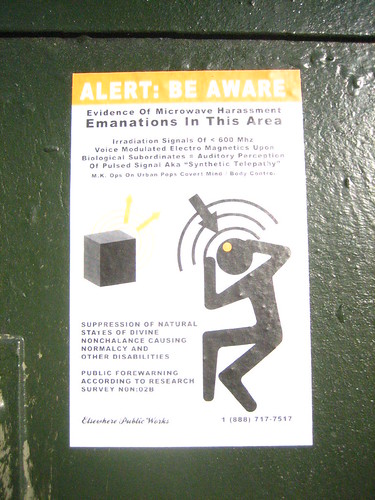
Divine nonchalance
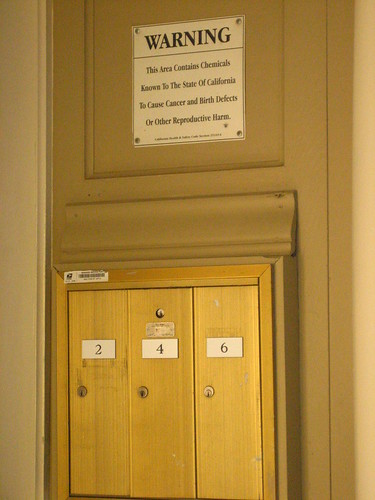
I hadn't realized just how many dangers lurked on my morning walk to work, until I started to read the signs along the way...

Monday, December 15, 2008
Hallelujah
Night starts too early and lasts deep into morning, waking up dull and heavy, the dark weighing on my chest. I want to burrow under the covers like my cat, nose first into warmth, the fingers of dreams lacing in and through my waking mind.
I stand in the kitchen staring at an empty pan and wonder at its meaning.
I have an appointment downtown, the city desperately decked in holiday cheer and screaming SALE SALE, bell-ringing Salvationeers and brass bands and shopping bags knocking against knees, shoppers looking nonplussed to find only one bag in hand, last year it was twenty, but even Santa's cinching the belt another notch.
I'm cranky and late and hungry, no time to dodge my way through the crowds to the library, just hope for a train soon and home to lunch.
Down in the Powell Street station a stringy guy in reindeer antlers sings "The Night They Drove Old Dixie Down" with his guitar case open and he's good, the song pulls at me, but I have a train to catch and deeper in the station now another busker, this one a girl.
She looks unlikely, all pudge and colorless hair, sitting cross-legged on the floor of the station, guitar in her lap, but I get closer and now I can hear her voice, breaking free of the station and soaring up above the street, people are standing where they are to listen. She's singing "Hallelujah" and that's it, that's almost all I can take. I'm going to break into tears right here in the station. She finishes the song and I dig around in my purse to find all the quarters I can to drop in her case. Someone else is whispering his awe to her and she just says thanks and turns the page in her music.
A night later and already it's full dark at five. I'm in a coffee shop before strolling to a party, enough time to work on rewrites and I hear the familiar opening, it's John Cale's version, Hallelujah, and this time I think, yeah. Maybe the universe is speaking. We're on the edge of solstice, the earth turns and - miraculously - the weight shifts. Sun begins to rise a little earlier and hang in the sky a little longer.
Just hold on another week and watch. Hallelujah.
Now I've heard there was a secret chord
That David played, and it pleased the Lord
But you don't really care for music, do you?
It goes like this
The fourth, the fifth
The minor fall, the major lift
The baffled king composing Hallelujah
Hallelujah
Hallelujah
Hallelujah
Hallelujah
Your faith was strong but you needed proof
You saw her bathing on the roof
Her beauty and the moonlight overthrew you
She tied you
To a kitchen chair
She broke your throne, and she cut your hair
And from your lips she drew the Hallelujah
Hallelujah
Hallelujah
Hallelujah
Hallelujah
Baby, I've been here before.
I know this room, I've walked this floor.
I used to live alone before I knew you.
I've seen your flag on the marble arch,
But love is not a victory march,
No it's a cold and it's a broken Hallelujah.
Hallelujah
Hallelujah
Hallelujah
Hallelujah
There was a time you let me know
What's really going on below,
Ah but now you never show it to me, do you?
Remember, yeah when I moved in you,
And the holy dove was moving too,
And every breath we drew was Hallelujah.
Hallelujah
Hallelujah
Hallelujah
Hallelujah
Maybe there's a God above,
All I ever learned from love
Is how to shoot at someone who outdrew you.
But it's not a cry that you hear at night,
It's not somebody who's seen the light
No it's a cold and it's a broken Hallelujah.
Hallelujah
Hallelujah
Hallelujah
Hallelujah
I did my best, it wasn't much.
I couldn't feel, so I learned to touch.
I've told the truth, I didn't come all this way to fool you.
Yeah even though it all went wrong
I'll stand right here before the Lord of Song
With nothing on my lips but Hallelujah.
Hallelujah, Hallelujah, Hallelujah, Hallelujah.
Hallelujah, Hallelujah, Hallelujah, Hallelujah.
I stand in the kitchen staring at an empty pan and wonder at its meaning.
I have an appointment downtown, the city desperately decked in holiday cheer and screaming SALE SALE, bell-ringing Salvationeers and brass bands and shopping bags knocking against knees, shoppers looking nonplussed to find only one bag in hand, last year it was twenty, but even Santa's cinching the belt another notch.
I'm cranky and late and hungry, no time to dodge my way through the crowds to the library, just hope for a train soon and home to lunch.
Down in the Powell Street station a stringy guy in reindeer antlers sings "The Night They Drove Old Dixie Down" with his guitar case open and he's good, the song pulls at me, but I have a train to catch and deeper in the station now another busker, this one a girl.
She looks unlikely, all pudge and colorless hair, sitting cross-legged on the floor of the station, guitar in her lap, but I get closer and now I can hear her voice, breaking free of the station and soaring up above the street, people are standing where they are to listen. She's singing "Hallelujah" and that's it, that's almost all I can take. I'm going to break into tears right here in the station. She finishes the song and I dig around in my purse to find all the quarters I can to drop in her case. Someone else is whispering his awe to her and she just says thanks and turns the page in her music.
A night later and already it's full dark at five. I'm in a coffee shop before strolling to a party, enough time to work on rewrites and I hear the familiar opening, it's John Cale's version, Hallelujah, and this time I think, yeah. Maybe the universe is speaking. We're on the edge of solstice, the earth turns and - miraculously - the weight shifts. Sun begins to rise a little earlier and hang in the sky a little longer.
Just hold on another week and watch. Hallelujah.
Now I've heard there was a secret chord
That David played, and it pleased the Lord
But you don't really care for music, do you?
It goes like this
The fourth, the fifth
The minor fall, the major lift
The baffled king composing Hallelujah
Hallelujah
Hallelujah
Hallelujah
Hallelujah
Your faith was strong but you needed proof
You saw her bathing on the roof
Her beauty and the moonlight overthrew you
She tied you
To a kitchen chair
She broke your throne, and she cut your hair
And from your lips she drew the Hallelujah
Hallelujah
Hallelujah
Hallelujah
Hallelujah
Baby, I've been here before.
I know this room, I've walked this floor.
I used to live alone before I knew you.
I've seen your flag on the marble arch,
But love is not a victory march,
No it's a cold and it's a broken Hallelujah.
Hallelujah
Hallelujah
Hallelujah
Hallelujah
There was a time you let me know
What's really going on below,
Ah but now you never show it to me, do you?
Remember, yeah when I moved in you,
And the holy dove was moving too,
And every breath we drew was Hallelujah.
Hallelujah
Hallelujah
Hallelujah
Hallelujah
Maybe there's a God above,
All I ever learned from love
Is how to shoot at someone who outdrew you.
But it's not a cry that you hear at night,
It's not somebody who's seen the light
No it's a cold and it's a broken Hallelujah.
Hallelujah
Hallelujah
Hallelujah
Hallelujah
I did my best, it wasn't much.
I couldn't feel, so I learned to touch.
I've told the truth, I didn't come all this way to fool you.
Yeah even though it all went wrong
I'll stand right here before the Lord of Song
With nothing on my lips but Hallelujah.
Hallelujah, Hallelujah, Hallelujah, Hallelujah.
Hallelujah, Hallelujah, Hallelujah, Hallelujah.
Tuesday, December 02, 2008
Weight
On the bus tonight, a young white woman in neat sweats is getting off at my stop. Her hair is in a bun. She stands at the top of the stairs as the light above the door turns green. She bends at the waist, pushing at the doors without treading on the stairs.
She pushes with thumb and finger on the handle, then folds her arm back against her chest, then reaches out to push again. You need to step on the stairs to open the doors, but she doesn't know this, leaning gingerly over the gap to push against the doors one more time.
I make my way around the other passengers, and step heavily on the stair. The doors spring open. The woman launches out and over the stairs without touching them. She lands on one foot, darting up and across the street before the bus can close its doors and release the brakes.
I watch her sprint away, shouldering my bags and lagging by nearly half a block already. She pauses once to look behind her as the bus pulls around the corner, then turns back, her tidy bun gleaming in the dark.
She pushes with thumb and finger on the handle, then folds her arm back against her chest, then reaches out to push again. You need to step on the stairs to open the doors, but she doesn't know this, leaning gingerly over the gap to push against the doors one more time.
I make my way around the other passengers, and step heavily on the stair. The doors spring open. The woman launches out and over the stairs without touching them. She lands on one foot, darting up and across the street before the bus can close its doors and release the brakes.
I watch her sprint away, shouldering my bags and lagging by nearly half a block already. She pauses once to look behind her as the bus pulls around the corner, then turns back, her tidy bun gleaming in the dark.
Sunday, November 23, 2008
A failure of imagination
The movement of the historical moment beneath my feet has shut me up lately. I chose early on to make this a literary blog, not a political blog, but every time I begin a post, all I can think about is politics. So let me get this out of the way.
I was moved and exhilarated at the election of Barack Obama a few weeks ago. The next day, however, that joy was tempered as it became clear that Proposition 8 was going to pass here in California. This particular issue was deeply personal for me.
I was raised LDS, and I am still officially a member of that church, although I have been inactive for many years. My family and many of my friends are active members in good standing. Watching the church of my birth and my family put so much energy into the passage of this proposition has been painful.
Maybe it is a failure of imagination on my part, but despite my best efforts, I cannot see the compelling reason to strip away the right of gay people to marry.
A comment on a friend's website asked, "Why do they want the word marriage so much?"
This focused it all down to a single point for me. To me the question is, "Why do you want to be married? Why do you want the word marriage?"
"They" are not so different from you. Gay people want the same things straight people want (and have the same wide spectrum of wants as well). Did you grow up dreaming of being married? Did you imagine what your wedding dress would look like? Did you pick out your colors and flowers before you ever met your intended?
Now imagine all of that is true. You are still you, having the same dreams you have always had. And you meet and fall in love with the person you want to spend your life with, the person that all those fantasies centered around. But the person you love is someone the world around you says is someone you can't marry. Maybe there are a large number of churches (though not all) who believe it is a sin for you to love that person.
Does any of that change your wishes? Do you choose to be untrue to yourself and your love, and try to love someone the world approves of?
Do you foist a false marriage on someone you don't love, you can't love, in order to gain the approval of the world? (And what, then, have you done to the innocent other in this false marriage?) In order to obtain full citizenship in your society? Or do you quietly remain single and humbly take what crumbs the adults will allow to fall from the table?
Why is marriage important? Because marriage is the only way we have to choose and build our own family. We are born into a family, or we may be adopted into one, but when we marry someone, each party is freely choosing the other. A marriage makes the person you love legally your kin. No other civil contract can do this.
For those who believe in the words of Jesus Christ, it can be said simply: "Do unto others as you would have them do unto you."
How would you react if a large group of people put vast amounts of money and energy into forbidding you to marry? Whatever else they may say, how loving would that seem to you?
Maybe my imagination has failed if I am unable to place myself in the position of the people who vigorously campaigned to make unlawful the marriages of many of my close friends, but if so, mine is not the only failure.
The ability to truly empathize is, I think, essential in a just society.
And here is where I see the problem of bringing politics in, because I can't end with just one issue. The prop 8 issue hit me close to where I live, but this should hit everyone:
5 at Guantanamo Ordered Released
Five men have been imprisoned and tortured by our government, and thus by all of us, for no reason at all. That we have allowed this to happen tells me that we have so very far to go. That we can, collectively, say that these people "deserved" this - that anyone "deserves" torture and no hope of justice - tells me that we have managed to convince ourselves that they are not people at all.
I'll go back to the way I usually write here. I can't write well or coherently about politics directly, but I hope that, at the bottom of every post, every little encounter I record, someone can see the fundamental reason I write: every human being is an individual with a soul. If your heart can beat for a moment with someone I see on the bus, maybe it can also beat with a man in a cell who has never seen his daughter, with a boy who dreams of being married one day, with a woman who wants to hold the hand of her wife in the hospital.
Update: I want to make absolutely clear that what I am talking about, what Prop 8 was about, is civil marriage. Religions are - and should remain - free to define what marriage means to them. Andrew Sullivan again puts it very well.
I was moved and exhilarated at the election of Barack Obama a few weeks ago. The next day, however, that joy was tempered as it became clear that Proposition 8 was going to pass here in California. This particular issue was deeply personal for me.
I was raised LDS, and I am still officially a member of that church, although I have been inactive for many years. My family and many of my friends are active members in good standing. Watching the church of my birth and my family put so much energy into the passage of this proposition has been painful.
Maybe it is a failure of imagination on my part, but despite my best efforts, I cannot see the compelling reason to strip away the right of gay people to marry.
A comment on a friend's website asked, "Why do they want the word marriage so much?"
This focused it all down to a single point for me. To me the question is, "Why do you want to be married? Why do you want the word marriage?"
"They" are not so different from you. Gay people want the same things straight people want (and have the same wide spectrum of wants as well). Did you grow up dreaming of being married? Did you imagine what your wedding dress would look like? Did you pick out your colors and flowers before you ever met your intended?
Now imagine all of that is true. You are still you, having the same dreams you have always had. And you meet and fall in love with the person you want to spend your life with, the person that all those fantasies centered around. But the person you love is someone the world around you says is someone you can't marry. Maybe there are a large number of churches (though not all) who believe it is a sin for you to love that person.
Does any of that change your wishes? Do you choose to be untrue to yourself and your love, and try to love someone the world approves of?
Do you foist a false marriage on someone you don't love, you can't love, in order to gain the approval of the world? (And what, then, have you done to the innocent other in this false marriage?) In order to obtain full citizenship in your society? Or do you quietly remain single and humbly take what crumbs the adults will allow to fall from the table?
Why is marriage important? Because marriage is the only way we have to choose and build our own family. We are born into a family, or we may be adopted into one, but when we marry someone, each party is freely choosing the other. A marriage makes the person you love legally your kin. No other civil contract can do this.
For those who believe in the words of Jesus Christ, it can be said simply: "Do unto others as you would have them do unto you."
How would you react if a large group of people put vast amounts of money and energy into forbidding you to marry? Whatever else they may say, how loving would that seem to you?
Maybe my imagination has failed if I am unable to place myself in the position of the people who vigorously campaigned to make unlawful the marriages of many of my close friends, but if so, mine is not the only failure.
The ability to truly empathize is, I think, essential in a just society.
And here is where I see the problem of bringing politics in, because I can't end with just one issue. The prop 8 issue hit me close to where I live, but this should hit everyone:
5 at Guantanamo Ordered Released
Five men have been imprisoned and tortured by our government, and thus by all of us, for no reason at all. That we have allowed this to happen tells me that we have so very far to go. That we can, collectively, say that these people "deserved" this - that anyone "deserves" torture and no hope of justice - tells me that we have managed to convince ourselves that they are not people at all.
I'll go back to the way I usually write here. I can't write well or coherently about politics directly, but I hope that, at the bottom of every post, every little encounter I record, someone can see the fundamental reason I write: every human being is an individual with a soul. If your heart can beat for a moment with someone I see on the bus, maybe it can also beat with a man in a cell who has never seen his daughter, with a boy who dreams of being married one day, with a woman who wants to hold the hand of her wife in the hospital.
Update: I want to make absolutely clear that what I am talking about, what Prop 8 was about, is civil marriage. Religions are - and should remain - free to define what marriage means to them. Andrew Sullivan again puts it very well.
Tuesday, November 04, 2008

Friday, October 24, 2008
Indian Summer
So sorry for the long silence! I'm back now and seem to have my feet under me again...
Walking to the main library on an autumn evening, the sun casting long shadows on the ground. I see two men in vigorous conversation, arms waving. As I get closer, I see they're speaking sign language. It is an argument. One man's gestures get larger and faster, like he wants to scoop the whole street into his arms. In sign language, this counts as shouting.
The other man gestures back, quietly. The first man drops his arms to his sides. They look at each other, and the first man opens his arms. The second man steps into his embrace. The sun outlines them as they hold each other, then slowly separate, their hands on each other's shoulders. The first man lifts one hand, touching his fingertips to his chin, then moves the hand out toward the other man.
This means "Thank you."
On the train home later that evening; it's dark outside, but a breath of gentle air washes in when the doors open. A punk gets on the train. Four-inch double mohawk, pierced eyebrow, lip, ears. Studded collar and tattoos covering his arms and neck. Leather wristbands.
He's talking on his cell phone.
"I know, I know. She took it with her, and I don't begrudge her that, you know? It's just, I miss her."
His eyes fill with tears. He looks down at his hands, listening to the voice at the other end.
"I don't want to lose her," he says, his voice going hoarse.
My skirt blows around my legs as the doors open, and I step out into the night.
Walking to the main library on an autumn evening, the sun casting long shadows on the ground. I see two men in vigorous conversation, arms waving. As I get closer, I see they're speaking sign language. It is an argument. One man's gestures get larger and faster, like he wants to scoop the whole street into his arms. In sign language, this counts as shouting.
The other man gestures back, quietly. The first man drops his arms to his sides. They look at each other, and the first man opens his arms. The second man steps into his embrace. The sun outlines them as they hold each other, then slowly separate, their hands on each other's shoulders. The first man lifts one hand, touching his fingertips to his chin, then moves the hand out toward the other man.
This means "Thank you."
On the train home later that evening; it's dark outside, but a breath of gentle air washes in when the doors open. A punk gets on the train. Four-inch double mohawk, pierced eyebrow, lip, ears. Studded collar and tattoos covering his arms and neck. Leather wristbands.
He's talking on his cell phone.
"I know, I know. She took it with her, and I don't begrudge her that, you know? It's just, I miss her."
His eyes fill with tears. He looks down at his hands, listening to the voice at the other end.
"I don't want to lose her," he says, his voice going hoarse.
My skirt blows around my legs as the doors open, and I step out into the night.
Thursday, September 25, 2008
Why I haven't been blogging
I'm volunteer coordinator for this:

If you're in San Francisco, check it out.
If you're in San Francisco, check it out.
Friday, August 29, 2008
A little hope
Naked hope, so sharp it's painful.
When I heard him speak four years ago, I felt the same thing. I wished - despairingly - that we were the kind of country that could elect someone like him President.
Yeah, he's just a guy, just a politician. I know this, too well. He won't save us. But if we take a chance on someone like this - someone who appeals to our better lights, who will say, "I am my brother's keeper" - if we take this chance, maybe we can save ourselves.
Maybe it will show we haven't given up on ourselves yet.
When I heard him speak four years ago, I felt the same thing. I wished - despairingly - that we were the kind of country that could elect someone like him President.
Yeah, he's just a guy, just a politician. I know this, too well. He won't save us. But if we take a chance on someone like this - someone who appeals to our better lights, who will say, "I am my brother's keeper" - if we take this chance, maybe we can save ourselves.
Maybe it will show we haven't given up on ourselves yet.
Friday, August 22, 2008
Boneshaker
Walking to the bus from a doctor's appointment, I turn left, on impulse, down a small side street. It's mid-morning on a weekday, and there are no cars on the street.
I pass a domed building with wide, curving steps to the front door. The steps and Doric columns are pinkish marble. A small plaque tells me it's the Armenian Community Center. Beside it is a small chapel with a quiet garden in front, Gregory the Illuminator, Armenian Church. A young man, bag over his shoulder, turns sharply and disappears into the chapel. I think about going in, sitting in a cool pew, the scent of incense. Are non-Armenians welcome? What is the protocol? Does one cross oneself?
I turn right on Euclid Avenue. Something glides silently into my peripheral vision, snags at my eye, and I turn to look. It's a man in full bicycle-racing gear: lycra shorts and numbered jersey, sleek helmet that gives a feeling of speed. He is lean and muscled. He's riding an antique velocipede, a boneshaker, the front wheel almost as tall as me, holding himself still and upright, he moves at a stately pace down the road.
Two men are washing windows on my side of the street, one at the top of a ladder, the other holding the bottom. The man holding the ladder watches the velocipede pass, he can look at nothing else, he and I pause, and watch. The bicyclist stops at a light, balances for a few precious seconds, creeping forward and back, but finally he has to jump down. The light turns green and he's neatly in the seat again, he's moved so swiftly that I missed the moment. The window washer and I watch him turn and disappear around the corner.
I breathe in and breathe out, a space opened up inside my head, and I walk through soft morning air toward the bus.
I pass a domed building with wide, curving steps to the front door. The steps and Doric columns are pinkish marble. A small plaque tells me it's the Armenian Community Center. Beside it is a small chapel with a quiet garden in front, Gregory the Illuminator, Armenian Church. A young man, bag over his shoulder, turns sharply and disappears into the chapel. I think about going in, sitting in a cool pew, the scent of incense. Are non-Armenians welcome? What is the protocol? Does one cross oneself?
I turn right on Euclid Avenue. Something glides silently into my peripheral vision, snags at my eye, and I turn to look. It's a man in full bicycle-racing gear: lycra shorts and numbered jersey, sleek helmet that gives a feeling of speed. He is lean and muscled. He's riding an antique velocipede, a boneshaker, the front wheel almost as tall as me, holding himself still and upright, he moves at a stately pace down the road.
Two men are washing windows on my side of the street, one at the top of a ladder, the other holding the bottom. The man holding the ladder watches the velocipede pass, he can look at nothing else, he and I pause, and watch. The bicyclist stops at a light, balances for a few precious seconds, creeping forward and back, but finally he has to jump down. The light turns green and he's neatly in the seat again, he's moved so swiftly that I missed the moment. The window washer and I watch him turn and disappear around the corner.
I breathe in and breathe out, a space opened up inside my head, and I walk through soft morning air toward the bus.
Sunday, August 10, 2008
Nostalgia is a drug, part 2
Continued right away to give Geo a little something to read while she heals...
We ask the desk clerk (the twin who wears the dark glasses) for a Do Not Disturb sign. At least I think that's what I ask him. Behind his sunglasses, he gives no sign of even hearing me. I describe to him, in my parody of French, our adventure of the morning. We don't want another adventure, I believe I tell him.
He nods quietly, his sunglasses reflecting the light from the street.
We don't ride the metro in Paris. This surprises me a bit; I romanticize the metro - symbol of childhood freedom - it represents a big piece of my Paris memories. And I know how to find my way around from metro stops. Maybe that's one reason. I don't want to rely on ancient habits to find my childhood. I want a new route there.
And neither of us is interested in going underground and getting on another vehicle. We both want to walk. We've been cooped up too long; we want to wander and lose ourselves.
Paris is the place to lose yourself. People leave you alone. I appreciate this. When I was here as a kid, my family tried to teach me how to wear a "metro face." A metro face is stone cold, man. It tells strangers that you are not a soft touch, you are not interested in a date or a cheap watch. My sister had a great metro face, like a door coming down, shutting off her beautiful features behind bulletproof glass like the Mona Lisa. She looked like she was born here.
I looked like a goofy small-town kid from Utah. I'd give my gap-toothed grin to anyone, look people in the eye, chat with someone who tried to engage me. But here's the thing. Parisians don't engage.
I still have no metro face. I can shut it down some, if I'm paying close attention, but it takes a lot of concentration, and I can't keep it up for long. This gets me in trouble all over the world. Most often, it just means I get into some interesting conversations with colorful people. But it can be tiring, after a while. By the time we got to Paris, I was exhausted.
And I got to rest. In Paris, I can look people in the eye, I can smile at them, and they don't see it as an invitation. Parisians don't engage. This means a genuine rest for me. I can let my face do what it wants, and nobody expects anything from me.
I could have used a metro face in Provo much more than I need one in Paris.
As we walk, my bones loosen in their joints. I walk easily beside Mr. Billy, opening up, not caring where we go or how long it takes to get there. We follow side streets because they're small and curving and I see the wide doors I remember from this quarter. Behind these doors are broad courtyards and stairs leading to apartments or boarding-house rooms.
"Hey," says Mr. Billy, "I think the Luxembourg Gardens are right down there."
He points down a street. I can feel the past barreling in toward my chest; the pension was at one corner of Luxembourg.
We walk down the street, and my eyes are eating everything in our path.
"That's the metro stop," I say, pointing. I remember this. Climbing up and out of the metro onto a garden island in the street. I slow down. Many of the wide doors I remember have been replaced by slick storefronts. Children's clothing. High-end chocolate. None of this was here before, and I start to doubt myself. Maybe this isn't it. It's been thirty years. How would I know?
A paper store, called Marie Papier. This makes me smile, just a fraction. My mom's name was Marie, and she was a poet. A little joke, just for me.
Across the street is a patisserie. It's more than thirty years old, and it hasn't changed, it hasn't changed at all. I'm nine years old and pressing my forehead against the glass, counting my centimes for a mille feuilles or a chocolate eclair, dancing my eyes over cakes and trills of chocolate and fresh raspberries.

We're here. There, to the left, is the pension itself. It's a nondescript building, but for me it breathes and speaks stories into my mind. I can see the row of windows on the second floor, where the classrooms were. I would hang over the railing during class breaks to see what was happening in the street. The back window, where the French student stayed - the only one who wasn't part of our group - I had a crush on him. I don't remember his name, but he wore a scarf around his neck and little round glasses, and he would tell me, in English, that he was "teer-ed", and I would reply that I had fatigue.
I squeeze Mr. Billy's hand, drunk on memories. It's several minutes before I can move.
More to come...in the meantime, check out Mr. Billy's take on our adventures in France
We ask the desk clerk (the twin who wears the dark glasses) for a Do Not Disturb sign. At least I think that's what I ask him. Behind his sunglasses, he gives no sign of even hearing me. I describe to him, in my parody of French, our adventure of the morning. We don't want another adventure, I believe I tell him.
He nods quietly, his sunglasses reflecting the light from the street.
We don't ride the metro in Paris. This surprises me a bit; I romanticize the metro - symbol of childhood freedom - it represents a big piece of my Paris memories. And I know how to find my way around from metro stops. Maybe that's one reason. I don't want to rely on ancient habits to find my childhood. I want a new route there.
And neither of us is interested in going underground and getting on another vehicle. We both want to walk. We've been cooped up too long; we want to wander and lose ourselves.
Paris is the place to lose yourself. People leave you alone. I appreciate this. When I was here as a kid, my family tried to teach me how to wear a "metro face." A metro face is stone cold, man. It tells strangers that you are not a soft touch, you are not interested in a date or a cheap watch. My sister had a great metro face, like a door coming down, shutting off her beautiful features behind bulletproof glass like the Mona Lisa. She looked like she was born here.
I looked like a goofy small-town kid from Utah. I'd give my gap-toothed grin to anyone, look people in the eye, chat with someone who tried to engage me. But here's the thing. Parisians don't engage.
I still have no metro face. I can shut it down some, if I'm paying close attention, but it takes a lot of concentration, and I can't keep it up for long. This gets me in trouble all over the world. Most often, it just means I get into some interesting conversations with colorful people. But it can be tiring, after a while. By the time we got to Paris, I was exhausted.
And I got to rest. In Paris, I can look people in the eye, I can smile at them, and they don't see it as an invitation. Parisians don't engage. This means a genuine rest for me. I can let my face do what it wants, and nobody expects anything from me.
I could have used a metro face in Provo much more than I need one in Paris.
As we walk, my bones loosen in their joints. I walk easily beside Mr. Billy, opening up, not caring where we go or how long it takes to get there. We follow side streets because they're small and curving and I see the wide doors I remember from this quarter. Behind these doors are broad courtyards and stairs leading to apartments or boarding-house rooms.
"Hey," says Mr. Billy, "I think the Luxembourg Gardens are right down there."
He points down a street. I can feel the past barreling in toward my chest; the pension was at one corner of Luxembourg.
We walk down the street, and my eyes are eating everything in our path.
"That's the metro stop," I say, pointing. I remember this. Climbing up and out of the metro onto a garden island in the street. I slow down. Many of the wide doors I remember have been replaced by slick storefronts. Children's clothing. High-end chocolate. None of this was here before, and I start to doubt myself. Maybe this isn't it. It's been thirty years. How would I know?
A paper store, called Marie Papier. This makes me smile, just a fraction. My mom's name was Marie, and she was a poet. A little joke, just for me.
Across the street is a patisserie. It's more than thirty years old, and it hasn't changed, it hasn't changed at all. I'm nine years old and pressing my forehead against the glass, counting my centimes for a mille feuilles or a chocolate eclair, dancing my eyes over cakes and trills of chocolate and fresh raspberries.
We're here. There, to the left, is the pension itself. It's a nondescript building, but for me it breathes and speaks stories into my mind. I can see the row of windows on the second floor, where the classrooms were. I would hang over the railing during class breaks to see what was happening in the street. The back window, where the French student stayed - the only one who wasn't part of our group - I had a crush on him. I don't remember his name, but he wore a scarf around his neck and little round glasses, and he would tell me, in English, that he was "teer-ed", and I would reply that I had fatigue.
I squeeze Mr. Billy's hand, drunk on memories. It's several minutes before I can move.
More to come...in the meantime, check out Mr. Billy's take on our adventures in France
Nostalgia is a drug
Our first morning in Paris, and we're sleeping in. Blissfully, hedonistically, sleeping late. Until we hear the doorknob rattle. We both scramble up, clutching the bedclothes to our chests, staring at the door.
"The maid?" says Mr. Billy.
"We have the key," I say.
In Parisian hotels, you leave your key at the front desk when you go out. No danger of losing the key, and the hotel always knows when you're in your room. No "Do not disturb" signs, but that shouldn't be a problem, should it?
The doorknob stops, and we stare for a moment before breathing, sighing, then snuggling back under the covers. The fingers of a dream are just creeping over my brain when the rattling starts up again. And then the unmistakable sound of a key sliding into a lock.
We leap into action: I lunge for the door, Mr. Billy for the safety of the bathroom.
"Nononononononon" I babble through the door, holding tight to the knob. The door opens an inch and I search the dusty files in my brain for the right phrase:
"Nous sommes ici! Nu! Nous sommes nu!"
I'm unsure if an announcement that we are naked will be enough of a deterrent, but the door closes at last, and I hear footsteps recede down the hall. Mr. Billy peeks around the bathroom door and I collapse on the bed, laughing hysterically.
"Well, we're up now. Wanna go see Paris?"
We have three days in Paris. No agenda, no appointments. We'd planned this break in the city without any ideas of hitting the tourist hot spots. In a way, Paris had been a big blank spot in my idea of our trip to France. We have no plans at all. We step out into the city, and I realize that we must not be far from the pension where I attended school when I lived here as a kid.
I use "attended school" loosely in this context. I was nine, and my dad was directing a University Study Abroad here. "School" was college classes at the pension where the students stayed. My family stayed in an apartment a few metro stops away. I completed the 4th grade via home study, and attended the college courses for fun. I got an A+ in French, but my 12-year-old brother showed me up with an A+++.
We were in Paris for less than a year, but that time was crazily overbalanced in my memory. Up until then, I was a kid from small-ish college town Provo, Utah. I could walk to my best friend's house & play in the field across the street. We could walk to school together and ride our bikes to the swimming pool, but to really get anywhere, I had to be driven.
One week in Paris with a metro map and a carte orange, and I could go anywhere I wanted in the city - all by myself. I hung out with college kids. I ate crepes made fresh from a street cart. My brother and I did the shopping for the whole family, because we'd picked up the language quicker than the older folks. It was paradise. This word has been overused, its juice and flavor squeezed out, but it was paradise in the full, fat, juicy sense of the word.
So I feign nonchalance when I propose to Mr. Billy that we try to find the pension. I don't want to make it a mission; that fear of disappointment is still strong, and most of what I want is unstructured time with Mr. Billy. We wander as aimless as eight-year-olds, pointing at buildings and eyeglass designs. We watch Parisians on the shared bicycles that belong to the city; you can pick one up just about anywhere, insert a token, and ride it to another part of the city, then drop it off.
A lot of people ride scooters. Helmet designs are particularly attractive here.
We wander, and we stop to eat hot crepes on the street, and we casually glance at the maps that are all over the city. I laugh when I see we've been walking in exactly the opposite direction from the pension.
To be continued...
"The maid?" says Mr. Billy.
"We have the key," I say.
In Parisian hotels, you leave your key at the front desk when you go out. No danger of losing the key, and the hotel always knows when you're in your room. No "Do not disturb" signs, but that shouldn't be a problem, should it?
The doorknob stops, and we stare for a moment before breathing, sighing, then snuggling back under the covers. The fingers of a dream are just creeping over my brain when the rattling starts up again. And then the unmistakable sound of a key sliding into a lock.
We leap into action: I lunge for the door, Mr. Billy for the safety of the bathroom.
"Nononononononon" I babble through the door, holding tight to the knob. The door opens an inch and I search the dusty files in my brain for the right phrase:
"Nous sommes ici! Nu! Nous sommes nu!"
I'm unsure if an announcement that we are naked will be enough of a deterrent, but the door closes at last, and I hear footsteps recede down the hall. Mr. Billy peeks around the bathroom door and I collapse on the bed, laughing hysterically.
"Well, we're up now. Wanna go see Paris?"
We have three days in Paris. No agenda, no appointments. We'd planned this break in the city without any ideas of hitting the tourist hot spots. In a way, Paris had been a big blank spot in my idea of our trip to France. We have no plans at all. We step out into the city, and I realize that we must not be far from the pension where I attended school when I lived here as a kid.
I use "attended school" loosely in this context. I was nine, and my dad was directing a University Study Abroad here. "School" was college classes at the pension where the students stayed. My family stayed in an apartment a few metro stops away. I completed the 4th grade via home study, and attended the college courses for fun. I got an A+ in French, but my 12-year-old brother showed me up with an A+++.
We were in Paris for less than a year, but that time was crazily overbalanced in my memory. Up until then, I was a kid from small-ish college town Provo, Utah. I could walk to my best friend's house & play in the field across the street. We could walk to school together and ride our bikes to the swimming pool, but to really get anywhere, I had to be driven.
One week in Paris with a metro map and a carte orange, and I could go anywhere I wanted in the city - all by myself. I hung out with college kids. I ate crepes made fresh from a street cart. My brother and I did the shopping for the whole family, because we'd picked up the language quicker than the older folks. It was paradise. This word has been overused, its juice and flavor squeezed out, but it was paradise in the full, fat, juicy sense of the word.
So I feign nonchalance when I propose to Mr. Billy that we try to find the pension. I don't want to make it a mission; that fear of disappointment is still strong, and most of what I want is unstructured time with Mr. Billy. We wander as aimless as eight-year-olds, pointing at buildings and eyeglass designs. We watch Parisians on the shared bicycles that belong to the city; you can pick one up just about anywhere, insert a token, and ride it to another part of the city, then drop it off.
A lot of people ride scooters. Helmet designs are particularly attractive here.
We wander, and we stop to eat hot crepes on the street, and we casually glance at the maps that are all over the city. I laugh when I see we've been walking in exactly the opposite direction from the pension.
To be continued...
Saturday, July 19, 2008
I love Paris in the springtime
I was ready to be disappointed. The last time I was in Paris, I was twenty-one years old. I lived here when I was nine. But with age comes disillusion and cold, mature assessment. Paris would not - could not - wow me again.
Boy, was I wrong.
It starts the minute we leave the train station. I spy La Rotonde and the Café de Flore out the cab windows. It's all I can do to keep from squealing. Simone de Beauvoir and Sartre used to hang out here. We step out onto the narrow street and that old Paris smell - diesel exhaust and chocolate and a soft breath from somewhere above the buildings - spirals into my brain and sets the fireworks going.
We drag our bags behind us (the cab was unable to pull directly up to the hotel door) to our little hotel on the corner of the Rue d'Odessa. We learn later that this is where the finalists for "Nouvelle Star," the French version of "American Idol" are staying, but we would never have known: the place is small and sleepy. The desk clerks appear to be identical twins; one wears dark glasses. The elevator can only hold Mr. Billy with the bags, so I take the scenic route up the curling staircase.
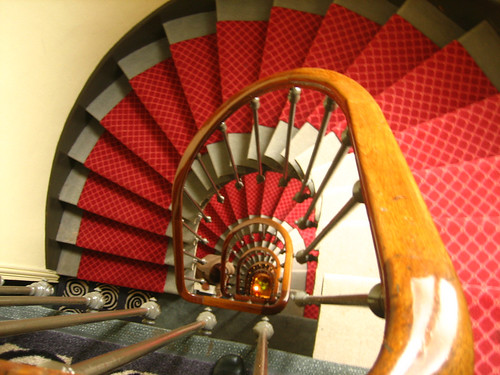
I lean out the window of our tiny room. To my right is Montparnasse tower, and directly below are sidewalk cafés.
"Let's go out and walk around," I say to Mr. Billy. I feel like I'm nine years old again, or twenty-one. I bounce on my toes. "Let's go see Paris."
And so we do.
Boy, was I wrong.
It starts the minute we leave the train station. I spy La Rotonde and the Café de Flore out the cab windows. It's all I can do to keep from squealing. Simone de Beauvoir and Sartre used to hang out here. We step out onto the narrow street and that old Paris smell - diesel exhaust and chocolate and a soft breath from somewhere above the buildings - spirals into my brain and sets the fireworks going.
We drag our bags behind us (the cab was unable to pull directly up to the hotel door) to our little hotel on the corner of the Rue d'Odessa. We learn later that this is where the finalists for "Nouvelle Star," the French version of "American Idol" are staying, but we would never have known: the place is small and sleepy. The desk clerks appear to be identical twins; one wears dark glasses. The elevator can only hold Mr. Billy with the bags, so I take the scenic route up the curling staircase.
I lean out the window of our tiny room. To my right is Montparnasse tower, and directly below are sidewalk cafés.
"Let's go out and walk around," I say to Mr. Billy. I feel like I'm nine years old again, or twenty-one. I bounce on my toes. "Let's go see Paris."
And so we do.
Saturday, July 12, 2008
You gotta get in where you fit in
To get to the main branch of the library from my doctor's office, I walk through the Tenderloin.
Past the legit theaters on Geary ('Tis a Pity She's a Whore, A Chorus Line, a one-man show about Shakespeare), then left on Hyde. It's morning still. A man walking toward me has a vivid bruise over his right eye, staining eyelid, brow, and all the way up to the top of his bald head. His toothless cheeks suck in against his gums.
Someone whistles behind me. I don't turn. They whistle again, and a skinny white guy at the next corner turns to grin past me. He raises a chin. A voice from behind me asks how his night went. The man across the street chuckles. The light changes, and I cross toward him, seeing the net of scars across his cheek and jaw. His hair stands out in tufts.
"You find your pot, huh?" the voice behind me calls.
He nods vaguely, grinning, and waves them off, crossing against the light. He heads toward the mini-park, a tiny green space tucked in among the buildings.
Ahead of me is a woman with bright blond hair hanging to her shoulders. She wears shining burgundy lycra tights under a tiny black miniskirt. A blue and green scarf is tied around one ankle, and she wobbles slightly in her green heels. I look for her face as we pass storefront windows, but all I can see are her big Jackie-O sunglasses.
At the library, volunteers are unloading books onto tables out front: "Linux for Dummies" and "Europe on $5 a Day." Passers-by gaze at the books, and the volunteers work silently.
On the front door is a notice - the library is closed until noon. It's a long time until noon.
I walk toward the Muni stop, disappointed. A man sitting on the library's low stone wall catches my eye. He looks big and healthy, and he smiles widely at me. He wears a knit cap with bright orange flames that stand out against his blue-black skin. It looks like a graphic representation of his thoughts.
"You gotta get in where you fit in," he says to me. "If you don't, that's it!"
I smile back at him and nod. The sun shines out from behind a cloud, and I head for my train.
Past the legit theaters on Geary ('Tis a Pity She's a Whore, A Chorus Line, a one-man show about Shakespeare), then left on Hyde. It's morning still. A man walking toward me has a vivid bruise over his right eye, staining eyelid, brow, and all the way up to the top of his bald head. His toothless cheeks suck in against his gums.
Someone whistles behind me. I don't turn. They whistle again, and a skinny white guy at the next corner turns to grin past me. He raises a chin. A voice from behind me asks how his night went. The man across the street chuckles. The light changes, and I cross toward him, seeing the net of scars across his cheek and jaw. His hair stands out in tufts.
"You find your pot, huh?" the voice behind me calls.
He nods vaguely, grinning, and waves them off, crossing against the light. He heads toward the mini-park, a tiny green space tucked in among the buildings.
Ahead of me is a woman with bright blond hair hanging to her shoulders. She wears shining burgundy lycra tights under a tiny black miniskirt. A blue and green scarf is tied around one ankle, and she wobbles slightly in her green heels. I look for her face as we pass storefront windows, but all I can see are her big Jackie-O sunglasses.
At the library, volunteers are unloading books onto tables out front: "Linux for Dummies" and "Europe on $5 a Day." Passers-by gaze at the books, and the volunteers work silently.
On the front door is a notice - the library is closed until noon. It's a long time until noon.
I walk toward the Muni stop, disappointed. A man sitting on the library's low stone wall catches my eye. He looks big and healthy, and he smiles widely at me. He wears a knit cap with bright orange flames that stand out against his blue-black skin. It looks like a graphic representation of his thoughts.
"You gotta get in where you fit in," he says to me. "If you don't, that's it!"
I smile back at him and nod. The sun shines out from behind a cloud, and I head for my train.
Friday, July 04, 2008
4th of July
Subscribe to:
Posts (Atom)
